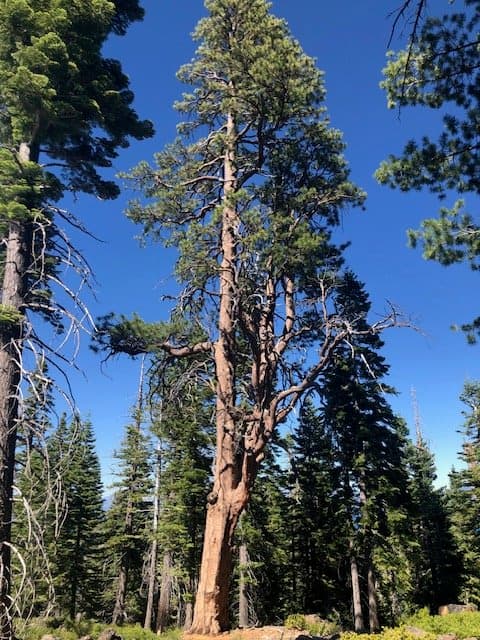
Defensible space is the buffer of managed vegetation around a home that gives the structure a chance to survive a wildfire and gives firefighters room to work. In the El Dorado County foothills it is required by law, and it is where tree decisions and fire decisions become the same decision. I am Christopher Hodge, an ISA Board Certified Master Arborist, and I assess which trees on a property are genuine hazards and which are sound, so you can meet defensible space requirements without clear cutting the canopy that makes your property worth living on. Independent consulting arborist, no removal crews, no incentive to take down more than you need.
What is defensible space?
Defensible space is the treated area between a structure and the wildland fuels around it. California Public Resources Code section 4291 requires 100 feet of defensible space, or out to the property line if it is closer, around homes in State Responsibility Areas, and Government Code section 51182 sets the same standard in Very High Fire Hazard Severity Zones within local responsibility areas. Most of the El Dorado County foothills fall in that category. The goal is not a moonscape. It is to break up the fuel so a fire drops out of the tree crowns to the ground, slows down, and can be stopped before it reaches the house.
The defensible space zones
The 100 feet is managed as zones, with the most intense treatment closest to the structure:
- Zone 0, the ember resistant zone, is the first 5 feet around the house, and it is recommended practice rather than an adopted statewide rule. Keep it as free of flammable material as possible, including bark mulch, dead leaves and needles, and limbs that overhang the roof.
- Zone 1 runs from 0 to 30 feet. Remove dead plants and fuel, keep tree limbs well clear of the roof and chimney, and space trees so their crowns do not touch.
- Zone 2 runs from 30 to 100 feet. Reduce and space the fuels, limb up trees, and clear dead wood, while keeping healthy, well spaced trees in place.
Zone 0 is not yet a statewide requirement. The Board of Forestry and Fire Protection was directed to write the rule under AB 3074 and SB 504, and its draft was still out for public comment in April 2026. Treat Zone 0 as strongly recommended practice rather than current law, and confirm the standards in force with CAL FIRE and your local fire district before you plan work.
Defensible space is a tree decision, not a clear cut
The most common mistake is thinking defensible space means removing every tree. It does not. Healthy, well spaced trees with their lower limbs pruned and their dead wood removed can stay, and a mature, open canopy can even slow a wind driven fire. What has to go is the ladder fuel and the dead or hazardous trees that carry fire up into the crowns or fail during a fire. I assess each tree on the property, tell you which ones genuinely need to come down and which are sound, and lay out the spacing and pruning that meets the requirement while keeping the trees you value.
Which species you are standing under changes the plan. Ponderosa pine, gray pine, and incense cedar carry fine fuel and resin, and they are the trees that most often move fire up into a canopy around Placerville, Camino, Pollock Pines, and Grizzly Flats. Blue oak, valley oak, and California black oak are comparatively poor fire carriers when they are healthy and the ground beneath them is kept clear, which is why a well kept oak is usually an asset in Zone 2 rather than something to remove.
After a fire, which trees will live?
After a burn, some scorched trees recover and others become hazards as the damage develops over the next few seasons. I evaluate the cambium, the roots, and the structure and give you a written assessment of which fire damaged trees are likely to survive and which pose a risk, so you are not removing trees that would have lived or keeping ones that will fail.
Frequently Asked Questions
How much defensible space do I need in El Dorado County?
State law requires 100 feet of defensible space, or out to your property line if it is closer, under California Public Resources Code section 4291 in State Responsibility Areas, and under Government Code section 51182 in Very High Fire Hazard Severity Zones within local responsibility areas. Most of the El Dorado County foothills fall in that category. The 100 feet is treated in zones, with the most work closest to the house.
Do I have to cut down all my trees for defensible space?
No. Defensible space is about spacing, pruning, and removing dead fuel and genuinely hazardous trees, not clearing every tree. Healthy, well spaced, limbed up trees can stay and can even help. I assess which trees are hazards and which are sound, so you keep the canopy you can while still meeting the requirement.
Can you assess fire damaged trees after a wildfire?
Yes. I evaluate scorched trees for their likelihood of survival and for the hazards that develop in the seasons after a fire, and I provide a written assessment you can act on. Call or text (530) 391-6100.
Sources
- California Public Resources Code section 4291 and CAL FIRE defensible space guidance (readyforwildfire.org). Confirm current zone requirements, including the ember resistant Zone 0, with CAL FIRE and your local fire district.