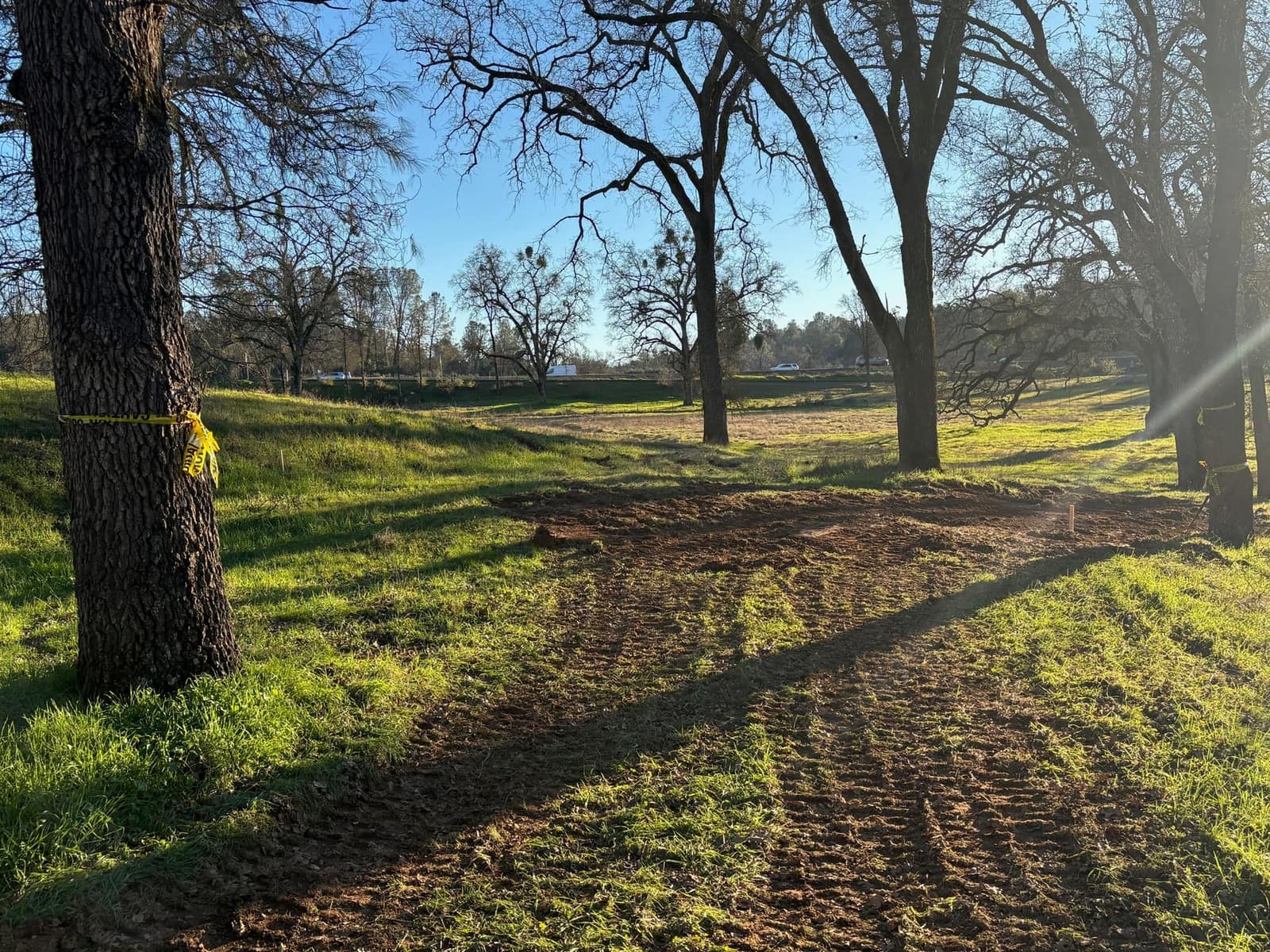
El Dorado County's Oak Resources Conservation Ordinance is the local law that governs how native oaks and oak woodlands are protected when land is developed or trees are removed. It is what stands behind the arborist reports and Oak Technical Reports the county asks for. I am Christopher Hodge, an ISA Board Certified Master Arborist based in Placerville, and I prepare oak reports under this ordinance regularly. This page explains in plain terms what it covers and when it applies. Always confirm the current rules with the county, because ordinances are updated over time.
What the ordinance is for
The ordinance exists to conserve El Dorado County's native oak woodlands, which are a defining part of the landscape and provide habitat, watershed protection, and the character the county has chosen to protect. Rather than banning oak removal outright, it sets up a system: identify the protected oaks a project affects, avoid and minimize the impact where possible, and mitigate what cannot be avoided. It is administered by the county Planning and Building department.
Which trees it protects
The ordinance protects California native oaks. In El Dorado County those are typically:
- Blue oak (Quercus douglasii)
- Valley oak (Quercus lobata)
- Interior live oak (Quercus wislizeni)
- Canyon live oak (Quercus chrysolepis)
- California black oak (Quercus kelloggii)
It generally applies to native oaks of six inches in diameter and larger, or multi trunk oaks totaling ten inches or more, though the exact threshold and how it is measured are set by the ordinance itself. Non native and planted ornamental oaks are usually treated differently. Confirm the current size threshold with the county before you rely on it.
Diameter at breast height is measured 4.5 feet above natural grade, on the uphill side of the trunk. On a multi trunk oak the county adds together the three largest trunks. A native oak with a single trunk of 36 inches or greater, or a multi trunk oak whose three largest trunks total 36 inches or greater, is a Heritage Tree and carries the highest level of protection in the ordinance.
Exemptions worth knowing before you call anyone
Not every oak on every parcel triggers a permit. The county's own guidance sets out exemptions that cover a lot of ordinary situations, including existing single family parcels of one acre or less, fire safe work done under an approved Fire Safe Plan, utility line maintenance, emergency work, and trees that are genuinely dead, dying, or diseased. There is also a limited personal use allowance of no more than eight trees per parcel per year.
Two points that catch people out. Trimming an individual native oak is allowed by right and needs no permit, as long as the trimming does not physically destroy the tree, so ordinary pruning is not the problem people assume it is. And impacts to Heritage Trees, to individual valley oaks, and to valley oak woodland are not exempt at all. Those must be mitigated whether or not a county permit is otherwise required, which makes valley oak the strictest category in the ordinance.
Removing a tree as dead, dying, or diseased is not a self certification. The county expects written documentation from a qualified professional, and it specifically pushes back on mistletoe as a justification. Heavy mistletoe alone does not make an oak diseased, and the county asks for a real explanation of why corrective work such as pruning the mistletoe out is not feasible before it will accept removal.
When the ordinance applies to your project
The most common trigger is a permit, a grading or building permit, on a property with protected oaks. New construction, subdivisions, additions, driveways, and clearing can all bring a project under the ordinance when protected oaks fall within the area of impact. Routine care of your own trees is treated differently from removal driven by development, and that distinction matters.
Avoid, minimize, mitigate
The ordinance follows a familiar conservation sequence. First, design the project to avoid protected oaks where you can. Second, minimize the impact on the oaks you keep by protecting their root zones during construction. Third, mitigate the loss that remains, usually through oak canopy retention standards, replacement planting, or payment of an in lieu fee into the county oak conservation fund. An Oak Technical Report documents how a larger project meets these requirements.
Arborist report or Oak Technical Report?
Smaller projects may need only an arborist report that inventories the affected oaks and the impacts. Larger projects, or those with broader oak woodland impact, generally require a full Oak Technical Report. The county decides which applies based on the project, and part of my job is preparing the right document to its standards so your permit is not delayed by paperwork that misses the mark.
Exemptions and special cases
The ordinance recognizes that some situations are different. Dead, dying, or genuinely hazardous oaks, certain agricultural activities, and emergencies are often handled under separate provisions, but you usually still need documentation from a certified arborist rather than removing a protected oak on assumption. A written tree risk assessment is the cleanest way to document that an oak is truly hazardous. Confirm any exemption with the county before acting.
How county rules differ from city rules
The Oak Resources Conservation Ordinance applies in unincorporated El Dorado County. Incorporated cities such as Placerville and South Lake Tahoe have their own tree regulations, so the first question for any parcel is whether it sits in the unincorporated county or inside a city. The answer changes which rules apply and which department you deal with. I confirm this for your address before anything else.
Frequently Asked Questions
What size oak is protected in El Dorado County?
The ordinance generally applies to native oaks of six inches in diameter and larger, or multi trunk oaks totaling ten inches or more, but the exact threshold and the measurement method are defined in the ordinance and can change. I confirm the species and trunk size on site and verify the current threshold with the county so the determination is correct for your project.
Can I remove an oak on my own property?
Not freely if it is a protected native oak and the removal is tied to development. There are provisions for dead, dying, and hazardous trees and for certain situations, but most removals connected to a permit or project fall under the ordinance and need documentation. When in doubt, get the tree assessed before the saw comes out.
What is mitigation under the oak ordinance?
Mitigation is how you offset the loss of protected oaks a project cannot avoid. Depending on the project it can mean retaining a required share of the oak canopy, planting replacement oaks, or paying an in lieu fee into the county's oak conservation fund. An Oak Technical Report spells out the mitigation for a given project.
Does El Dorado County have a tree ordinance?
Yes. In the unincorporated county, the tree ordinance is the Oak Resources Conservation Ordinance, which protects native oaks. There is generally no separate tree ordinance for other species in the unincorporated area, so when people ask about the El Dorado County tree ordinance, this oak ordinance is almost always what they mean. Incorporated cities such as Placerville have their own tree rules, and tree removal in the unincorporated Tahoe Basin falls under the Tahoe Regional Planning Agency rather than the county oak ordinance.
Sources
- El Dorado County Oak Resources Conservation Ordinance and Oak Resources Management Plan requirements, administered by the El Dorado County Planning and Building Department. Confirm current thresholds, exemptions, and mitigation provisions directly with the county.