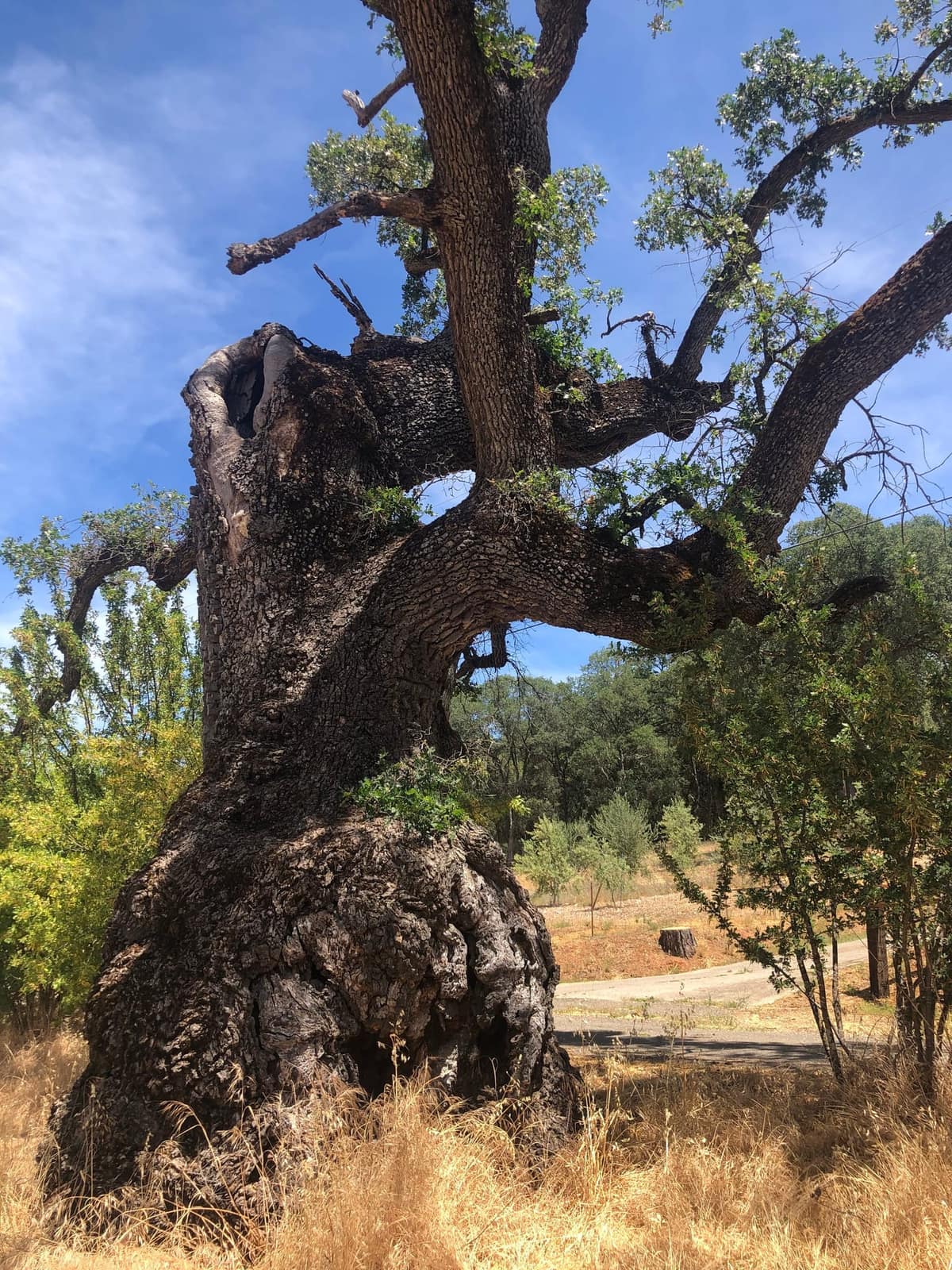
The Mediterranean oak borer is an invasive ambrosia beetle that is killing native oaks across Northern California, and it has already reached Sacramento and El Dorado counties. Unlike its behavior in its native range, where it mostly attacks trees that are already dying, the Mediterranean oak borer here goes after apparently healthy oaks and breeds several generations a year, which is what makes it so dangerous to our valley and blue oaks. I am Christopher Hodge, an ISA Board Certified Master Arborist, and this is exactly the kind of emerging threat I watch for and diagnose in the field. This page explains what the beetle is, how to recognize it, and what to do, with links to the UC and CAL FIRE resources below.
What is the Mediterranean oak borer?
The Mediterranean oak borer, Xyleborus monographus, is a tiny ambrosia beetle native to Europe, western Asia, and North Africa. Like other ambrosia beetles, it does not eat wood. It tunnels galleries into the trunk and branches and farms a fungus inside them, and it is that fungus, carried from tree to tree by the beetle, that does much of the damage. As the beetle bores and the fungus spreads through the wood, the tree's ability to move water is disrupted, and infested trees decline and die. It was first found in California near Calistoga, in Napa County, in 2019.
Why it is worse here than in Europe
In its native range the Mediterranean oak borer is a minor pest that mostly attacks trees that are already dying, with a single generation a year. In California it behaves very differently. It infests both stressed and apparently healthy oaks, and it produces multiple generations in a single year, so populations build fast and a tree that looked fine can be colonized and killed. That change in behavior is why entomologists at UC and CAL FIRE are tracking it so closely.
Which oaks it attacks, and where it is now
The beetle targets the white oak group. In California its main victims are valley oak (Quercus lobata) and blue oak (Quercus douglasii), the very oaks that define our foothill and valley landscapes, along with Oregon white oak farther north. Since the 2019 detection it has spread through Napa, Lake, Sonoma, and Sacramento counties, and it has been detected in Yolo, Mendocino, and El Dorado counties. In other words, it is already here in the Sacramento region and the El Dorado foothills I serve.
Signs of a Mediterranean oak borer infestation
The signs are easy to miss until the tree is in real trouble. Watch for:
- Canopy decline that starts high in the tree, since the beetle usually colonizes a large branch in the upper canopy first.
- Branch dieback and wilting that spreads downward over one or more seasons.
- Tiny, round exit holes in the bark, about the size of a pin.
- Fine boring dust, called frass, in the cracks of the bark and at the base of the tree.
These signs overlap with other oak problems, from drought stress to Armillaria root disease to Biscogniauxia canker, so confirming the cause matters. Catching it early, before it spreads through the canopy or to neighboring oaks, is the whole game.
What to do if you suspect it
There is no proven cure for an infested tree yet, and research on control is ongoing, so the response is about early detection, careful handling, and slowing the spread:
- Have the tree assessed by a qualified arborist to confirm whether it is the Mediterranean oak borer and not another cause of decline.
- Do not move the wood. Firewood and green oak material are the fastest way the beetle spreads, so infested wood should stay on site or be handled per current guidance, never hauled to a new area.
- Report a suspected infestation to UC IPM, which is tracking the spread across California.
- Keep your oaks as healthy as you can, and remove and properly handle any tree that is already heavily infested.
How I help
I diagnose oak decline in the field and, when needed, under the microscope, so you know whether you are dealing with the Mediterranean oak borer, a root disease, a canker, or simple drought stress, because the response to each is different. If it is the borer, I lay out the options, from monitoring and keeping the surrounding oaks healthy to removing and correctly handling an infested tree so the beetle does not spread from your property. Because I run no removal crews, that advice is based on the tree and the risk, not on selling a removal.
UC extension and CAL FIRE resources
- UC IPM: Mediterranean Oak BorerThe UC Statewide Integrated Pest Management Program's page on the beetle, its host oaks, the signs to look for, and how to report a suspected infestation.
- UC ANR: Mediterranean Oak BorerUniversity of California Agriculture and Natural Resources research and outreach on the beetle's biology, spread, and threat to California's native oaks.
- CAL FIRE Forest Entomology and Pathology ProgramCAL FIRE's program for detecting and managing forest insects and diseases, including emerging invasive threats to California's oaks and conifers.
- Don't Move Firewood: Mediterranean Oak BorerHow moving firewood spreads the beetle, and the simple rule that slows it: buy it where you burn it.
Frequently Asked Questions
Is the Mediterranean oak borer in the Sacramento area?
Yes. It was first found in California in Napa County in 2019 and has since spread into Sacramento County, with detections in neighboring El Dorado and Yolo counties. It is an active and growing threat to the valley and blue oaks in the region I serve.
Can a tree with Mediterranean oak borer be saved?
There is no proven cure yet. Research on control is ongoing, so for now the focus is early detection, keeping oaks healthy, and not spreading the beetle through infested wood. A heavily infested tree usually needs to be removed and its wood handled carefully. An arborist can confirm the diagnosis and tell you honestly where your tree stands.
How do I tell the Mediterranean oak borer from other oak problems?
The clue is the pattern. The borer typically starts high in the canopy and works down, leaving pin sized exit holes and fine boring dust in the bark, while root diseases and cankers show different signs lower on the tree. Because they overlap, I confirm the cause in the field and under the microscope before recommending anything. Call or text (530) 391-6100.