Ambrosia beetles are tiny wood boring insects that do not actually eat wood. They farm fungus. Each beetle carries spores of a symbiotic fungus, tunnels into a tree, and grows fungal gardens inside the wood as food for itself and its larvae, and it is those fungi, not the tunneling alone, that often damage or kill the tree. Most ambrosia beetles attack only dead or dying wood and are part of the natural recycling of a forest. A few invasive species attack living trees, and that is what makes them a growing concern for arborists in California.
How ambrosia beetles differ from bark beetles
Bark beetles feed on the living phloem just under the bark and can girdle a tree directly. Ambrosia beetles bore deeper, into the wood, and do not feed on it at all. They feed on the fungus they cultivate in their tunnels. Both groups belong mostly to the weevil subfamily Scolytinae, but the fungus farming partnership is what defines an ambrosia beetle, and it is why their damage shows up as staining and decay in the wood rather than as a chewed cambium.
The Mediterranean oak borer, the one to watch here
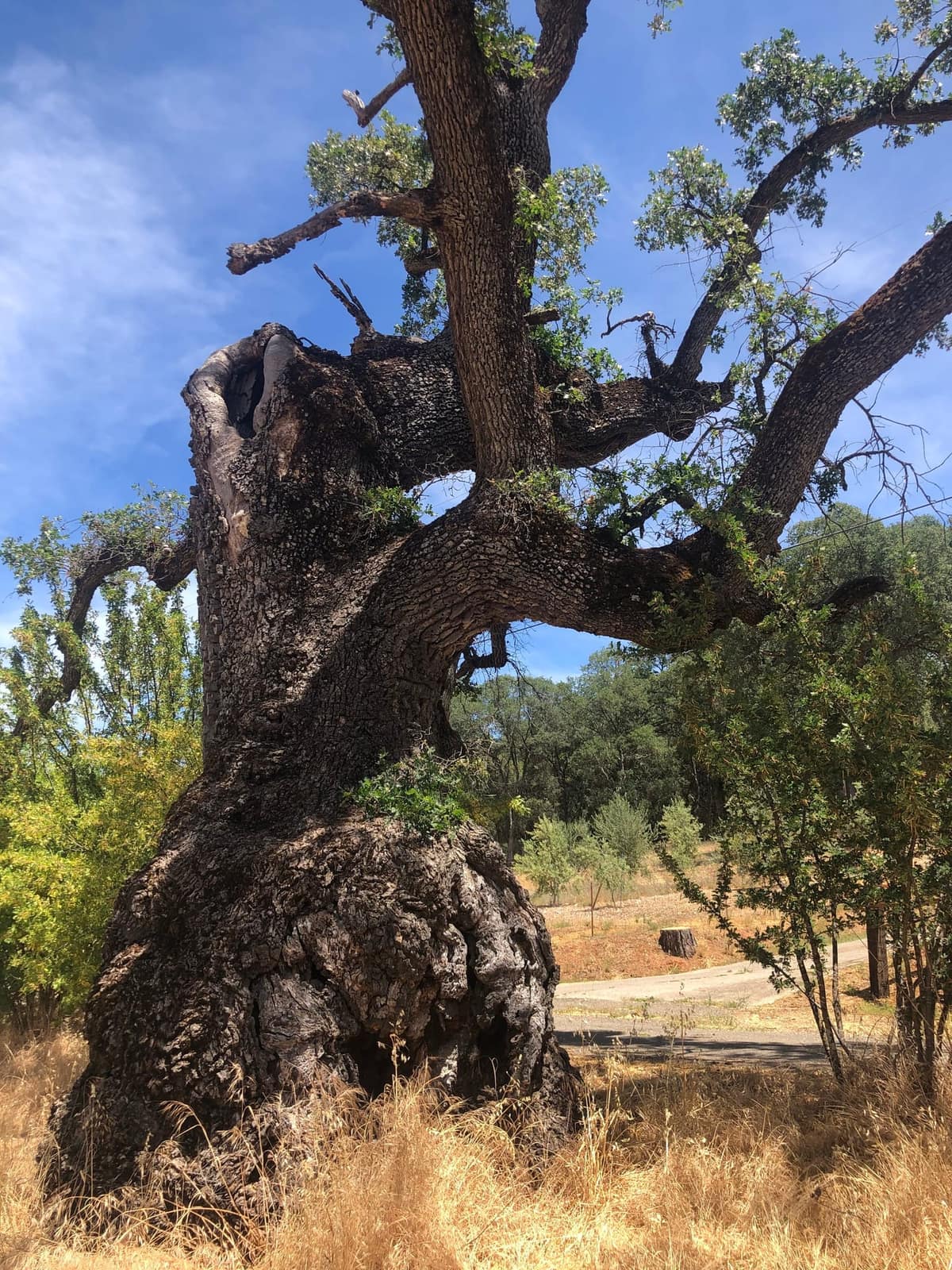
The invasive ambrosia beetle of greatest concern in our area is the Mediterranean oak borer, Xyleborus monographus. It was first detected in California in Calistoga, Napa County, in 2019, and is now spreading in Sacramento County, with detections in El Dorado and Yolo counties as well. It attacks valley oak and farms fungi that stain and kill the wood, usually colonizing a tree from the upper canopy downward. The first signs are wilting and dieback in the crown, tiny entry holes about one sixteenth of an inch across, and dark staining in the wood.
Why arborists are concerned
Invasive ambrosia beetles are hard to fight for three reasons. The beetle and its fungi live deep inside the wood where sprays cannot reach. The beetles breed inside the tree, so a population can build quickly and quietly. And they spread in cut wood, so moving infested oak firewood can carry the problem to a new neighborhood. Once a tree is heavily colonized, careful removal and disposal of the infested wood is often the main tool left.
What you can do
- Keep oaks healthy and unstressed, because stressed trees are more attractive to wood boring beetles.
- Do not move or store oak firewood from an affected area.
- Watch valley oaks for top down wilting and dieback, and have a declining oak assessed early.
- Report suspected Mediterranean oak borer infestations so spread can be tracked.
Frequently Asked Questions
Are ambrosia beetles the same as bark beetles?
No. Bark beetles feed on the living tissue just under the bark, while ambrosia beetles bore into the wood and feed on a fungus they cultivate there. Both are small weevils, mostly Scolytinae, but the fungus farming is what sets ambrosia beetles apart, and it is why their damage appears as wood staining and decay.
Is the Mediterranean oak borer in the Sacramento area?
Yes. The Mediterranean oak borer was first found in California in Napa County in 2019 and is now spreading in Sacramento County, with detections in El Dorado and Yolo counties. It primarily attacks valley oak. A valley oak that is wilting and dying back from the top down is worth an inspection.
Sources
- UC Agriculture and Natural Resources. Mediterranean Oak Borer.
- General ambrosia beetle and Scolytinae biology, USDA Forest Service.