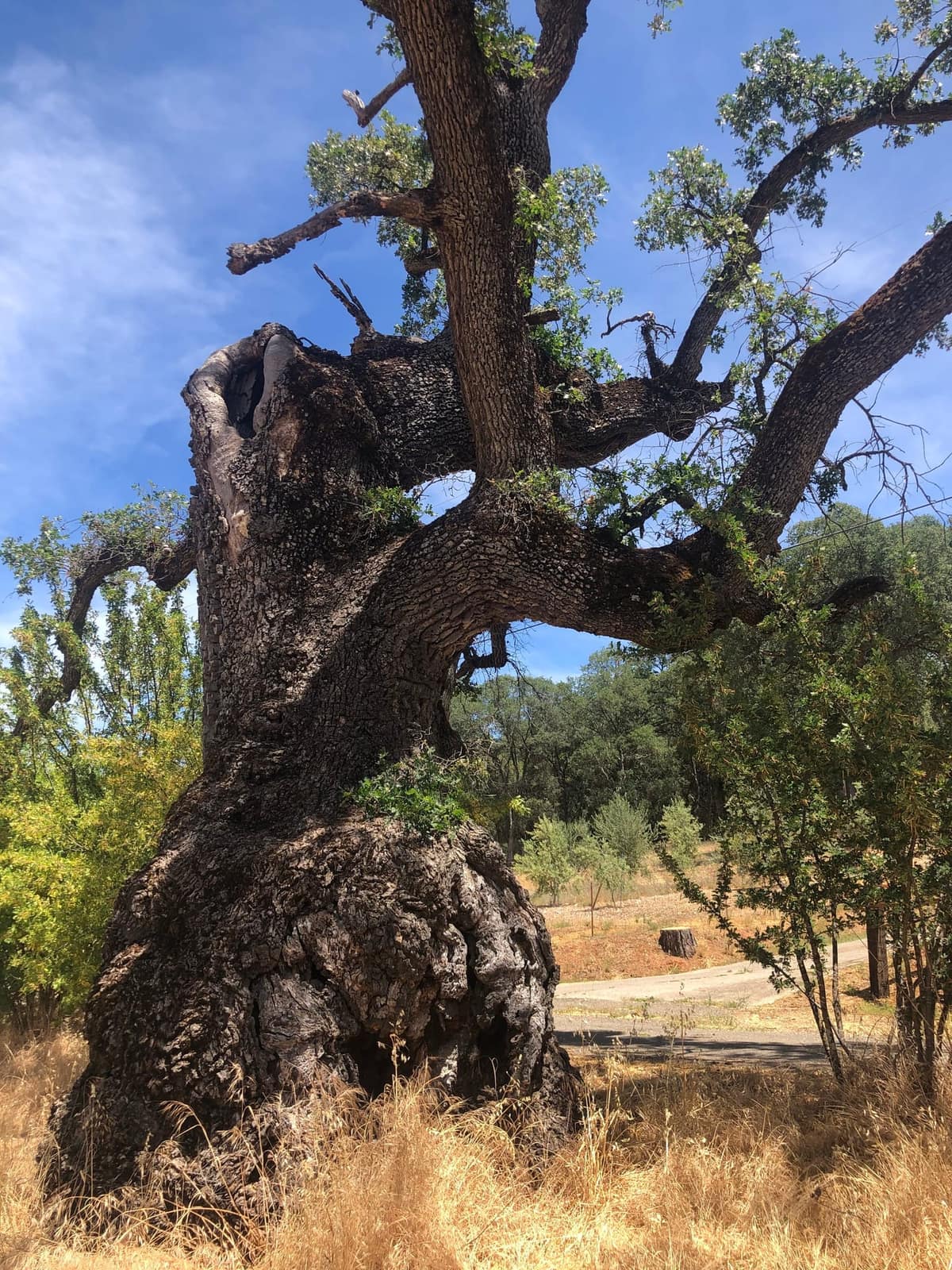
Rocklin regulates one thing, and it regulates it firmly: oaks. Chapter 17.77 of the municipal code, the Oak Tree Preservation Ordinance, has been in force since 1993 and it protects oak trees exclusively. Not madrone, not pine, not cedar. I am Christopher Hodge, an ISA Board Certified Master Arborist, and I write the oak reports the city process runs on. I hold no removal crews, so what you get from me is an assessment rather than an estimate.
The measurement rule that catches people out
The threshold itself is six inches. An oak with a trunk diameter of six inches or more, of a species the city lists as native to the Rocklin area, is a regulated tree and needs a permit before removal. Trunk diameter at breast height is measured 4.5 feet above the root crown, and for a multiple trunk tree the ordinance uses the largest trunk only. That is the opposite of every jurisdiction around it. El Dorado County adds the three largest stems together. Placer County and the City of Auburn both use an aggregate. Here the biggest trunk counts and the rest are ignored. A three stemmed oak with 5 inch trunks is regulated in Granite Bay and not here, while the same tree with one 7 inch stem is regulated here. If someone has handed you a diameter figure worked out from a neighboring city's habits, remeasure.
Heritage status depends on condition, not size alone
A heritage tree is an oak of 24 inches or more that is also of good or fair quality in health, vigor of growth and conformity to accepted standards of shape for its species. The condition test does real work in that sentence. A 24 inch oak in poor condition is not a heritage tree, and the difference is not academic. On a developed single family, duplex or triplex lot, removing a healthy heritage oak calls for five replacement trees while a non heritage oak calls for two, capped at five replacements on any one lot.
Where a permit will simply be denied
On developed multifamily, commercial and industrial property the ordinance does something unusual. If the director determines the oak is healthy, the removal permit shall be denied. There is no mitigation option, no fee to pay instead, and no negotiation over replacement stock. Only dead, diseased or hazardous trees may be removed, with one for one replacement or a fee at the director's option. For anyone holding commercial property, that turns the condition assessment into the entire question, and it has to be defensible.
The process, and the meeting nobody expects
The city charges nothing to issue an oak tree removal permit, but the process contains a step that is easy to miss. Within ten days of receiving an application, the director or a representative must meet with the applicant in person to discuss alternatives to removal. That meeting is mandatory. Walking in with a written assessment of the tree's condition, structure and realistic options is the difference between a productive half hour and a request for more information. On a developed single family, duplex or triplex lot the permit shall then issue after the meeting unless the application is withdrawn.
What mitigation actually costs
The fee schedule effective July 1, 2026 sets mitigation for one inch of oak at $96, a fifteen gallon replacement oak at $96, and a five gallon at $30, paid into the Oak Tree Preservation Fund when planting on site is not the route chosen. Undeveloped property is a separate track: development there requires a tree preservation plan permit and a security instrument of at least $10,000 before any grading, and outside the commercial and industrial zones mitigation runs at two replacements per tree removed while impacts stay within 20 percent of both the surveyed oak count and the total inches, rising to inch for inch replacement above that line. Any replacement, including a transplant, that dies within five years must be replaced. Removing an oak with no permit can carry triple mitigation fees plus restitution.
The fund is not an abstraction
Mitigation money here goes somewhere visible. The city's own accounting reported an oak tree mitigation fund balance of $1,409,171 as of mid 2017, with $80,554 of it spent on the Sierra College Boulevard and Interstate 80 landscaping project, and the fund has also gone toward acquiring the former golf course that became the Sunset Whitney Recreation Area, which carries existing oak woodland. A mitigation fee paid here buys oak canopy somewhere in town.
Granite ground and shallow roots
Rocklin's name is not decorative. Granite mining began around 1864, twenty two quarries were operating by 1910, and in 1912 nearly two thousand train carloads of granite left town for the state capitol and for buildings in San Francisco. What that history means for a tree is rooting volume. Blue oak is adapted to shallow, lean, well drained ground and holds on where little else will, but shallow soil over rock concentrates roots in the upper profile and puts them squarely in the path of trenching, driveway cuts and pool excavation. On this kind of site the root plate matters more than the crown, and it is the part nobody looks at.
Hazard mapping stops short of the city
In CAL FIRE's mapped data the city sits entirely within the local responsibility area and no very high hazard zone falls inside it, which is unusual for this side of the foothills. The practical consequence is that pressure on an oak here comes from the ordinance and the development process rather than from clearance rules. Mapped sampling is not a parcel determination, so confirm an address with the city if it matters to your project.
What I do here
- Oak reports and tree preservation plans for city permits
- Heritage oak condition assessment where the 24 inch threshold is in play
- Condition documentation for commercial and multifamily removal requests
- Tree risk assessment for oaks over homes, drives and parking areas
- Diagnosis of oak decline, decay fungi and root disease
Book an assessment
A site assessment with a written report starts at $500. The site visit on its own is $250 and covers up to one hour on site. If you are heading into the mandatory alternatives meeting, or you hold commercial property where a healthy oak cannot be removed at all, that report is the whole conversation. Call or text (530) 391-6100.
Book a consultationFrequently Asked Questions
How does the city measure a multiple trunk oak?
By the largest trunk only, at 4.5 feet above the root crown. The other stems are not added in. This is genuinely unusual and it reverses the practice of El Dorado County, which sums the three largest stems, and of Placer County and Auburn, which use aggregate totals. Measure your tree the local way before assuming it is or is not regulated.
What makes an oak a heritage tree in Rocklin?
Two things together: a trunk diameter of 24 inches or more, and good or fair quality in health, vigor and conformity to accepted standards of shape for the species. Size alone is not enough. Because a healthy heritage oak carries five replacement trees against a non heritage oak's two, the condition finding is where the money sits.
Can a business remove a healthy oak from its property?
No. On developed multifamily, commercial and industrial lots, if the director finds the oak healthy the permit shall be denied. Only dead, diseased or hazardous trees may be removed there, with one for one replacement or a fee at the director's option. That provision is stricter than what applies to houses, and it catches property managers who assume a fee will settle it.
Does the ordinance protect pines and cedars too?
No. Chapter 17.77 covers oak trees only, of the species listed as native to the area in the preservation guidelines adopted by resolution with the ordinance. That list runs from valley, blue, black, interior live, canyon live and California live oak through scrub oak and several natural hybrids. Conifers and broadleaf trees outside the genus are outside the ordinance, which is a real difference from Auburn, where madrone, incense cedar, ponderosa pine and Douglas fir are all protected.
Official city sources
- Rocklin Municipal Code Chapter 17.77, Oak Tree PreservationThe ordinance enacted by Ordinance 676 in 1993 and amended in 1996 and 1997, including the largest trunk measurement rule, heritage definition and mitigation.
- City of Rocklin oak tree removal permitThe city page for the removal permit itself, which the city issues without an application fee.
- Rocklin oak tree preservation guidelinesThe guidelines adopted by resolution alongside the ordinance, including the appendix listing the oak species treated as native to the area.