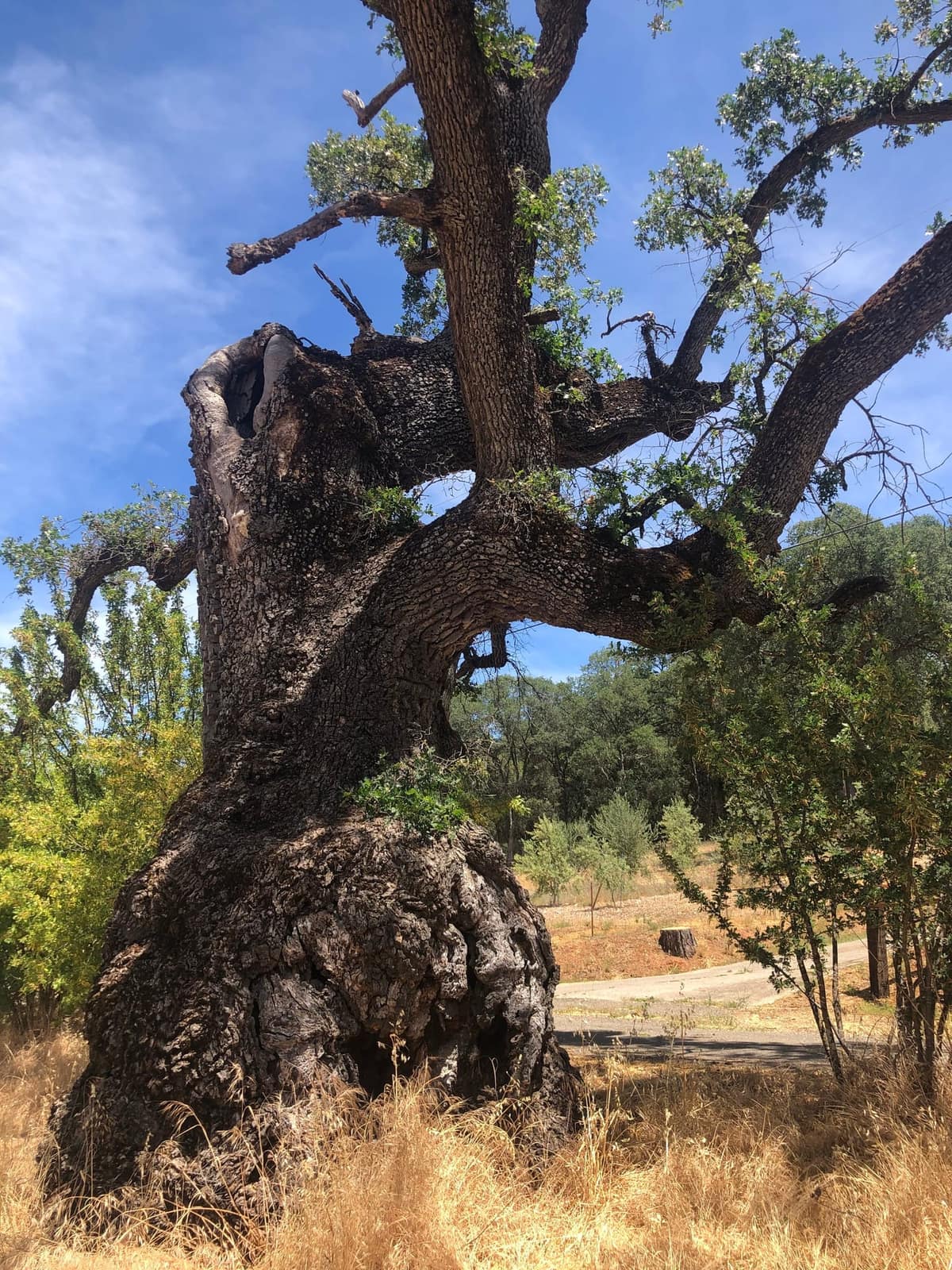
Most of Placer County lives under a general tree rule. Four communities live under something stricter, and this is one of them. Article 19.50 of the Placer County Code, Woodland Conservation, names the Granite Bay community plan area as a place its protections reach beyond the countywide baseline. I am Christopher Hodge, an ISA Board Certified Master Arborist. I write the tree reports the county asks for and diagnose what is going wrong with mature oaks, and I run no removal crews.
One of four named woodland conservation areas
Section 19.50.040 lists the areas the article reaches past the county baseline: part of the Horseshoe Bar and Penryn plan, the Dry Creek and West Placer plan, the Auburn and Bowman plan, and this community plan area. Being named is why a project here draws tree review an identical project elsewhere in the county might not. The article was adopted by Ordinance 6040-B in 2020 and sits in Chapter 19. If you have been handed a Placer County tree chapter numbered in the twelves, that is the wrong code.
A five inch oak is already a regulated tree
The threshold here is lower than anywhere nearby. The code defines a tree as a California native woody plant with a single stem at least 6 inches in diameter at breast height, or multiple trunks totaling at least 10 inches, but for any oak species the number drops to 5 inches. Auburn, Rocklin and El Dorado County all start at 6. Diameter is measured four and a half feet above ground on the high side. Foothill pine is expressly exempt from the article, and brush such as manzanita is not a tree at any size.
The shoreline and creek trigger catches small trees
Riparian rules reach further than diameter rules do. Inside the tree preservation areas, every tree regardless of size is subject to the article if it stands within 50 feet of the centerline of a seasonal stream, within 100 feet of a year round creek or river, or within 100 feet of the shoreline of a pond, lake or reservoir. With a reservoir on this community's doorstep, that last line is not theoretical.
The fifty percent rule and a ten year penalty
Removing more than half of the existing native trees 6 inches or larger on a property, or 5 inches or larger for oaks, requires a tree permit, with an exception for developed single family lots that cannot be subdivided. Skip that permit and the county can deny or defer any development application on the property for up to ten years. Ten years is the longest deferral in any ordinance I work under, and it attaches to the land rather than to whoever did the cutting. Ordinary unpermitted removal runs to five years, and construction damage to a tree marked for preservation is fined at $50 per scar.
Minor tree permits and the site plan
Single family lots and projects with no other discretionary permit use the minor tree permit, which the county arborist can also issue in the field. Timing is worth checking twice: the code says the application must be filed not less than ten days before the work, while the county's current handout says thirty. Plan on thirty. The handout is also explicit about the drawing. Every protected tree within 50 feet of any development activity has to appear on the site plan, with trunk location and dripline shown.
Replacement, and what has to be alive in three years
Replacement can be required inch for inch, in stock no smaller than fifteen gallon, with at least half of the replacements a similar native species, which quietly rules out settling an oak obligation with a row of ornamentals. Survivability is then tested at three years. Where a site cannot hold all the replacements, the cost goes into the Placer County Tree Preservation Fund instead, at least ten percent of which the county must spend on education.
Summer water is what kills these oaks
The county built this into its own subdivision rules: major subdivisions must carry covenants protecting the native trees marked to be saved, and limited watering around oaks is the example the code itself gives. There is a reason. California's native oaks evolved without summer rain, and University of California integrated pest management guidance is blunt about it. Do not irrigate mature, established trees that have never been irrigated, and keep the root collar dry. Most infected native oaks that die of Armillaria root rot in California landscapes die from excessive irrigation or other stress rather than from an unusually aggressive fungus. A lawn that runs to the trunk, or a new pool deck trapping water against the buttress roots, will do more damage over five summers than any pest here. Valley oak complicates it further, since it is a groundwater species with vertical roots measured to eighty feet.
Landmark trees do not get the usual exemptions
The Board of Supervisors can designate a tree or grove as a landmark tree by resolution, and it does not have to be native; the code's own examples include the palms along English Colony Road and the deodar cedars on Highway 49. Landmark trees do not receive the ordinary exemptions. Firefighting aside, the storm damage, hazard and fire clearance exemptions other trees enjoy do not release a landmark tree.
What I do here
- Tree permit reports and the site plan tree data county submittals require
- Protected zone and encroachment analysis before grading or excavation
- Diagnosis of oak decline, root disease and decay fungi
- Tree risk assessment for oaks over houses, pools and drives
- Three year survivability inspections and condition reporting
When to call
A site assessment with a written report starts at $500. The site visit on its own is $250 and covers up to one hour on site. The most useful moment to spend it is before an irrigation redesign, a pool excavation or a grading plan is finalized, because most of what I get called about later started as a decision made on paper. Call or text (530) 391-6100.
Book a consultationFrequently Asked Questions
What size oak is protected in Granite Bay?
Five inches in diameter at breast height for any oak species, measured four and a half feet above ground on the high side of the tree. Other California native trees are protected from 6 inches on a single stem, or a 10 inch aggregate across multiple trunks. That is lower than every neighboring jurisdiction, so a tree an owner thinks of as a sapling can still require a permit.
Do I need a permit for a small tree near the water?
Very likely. Inside the county's tree preservation areas, every tree regardless of size is subject to the article when it stands within 100 feet of the shoreline of a lake or reservoir, within 100 feet of a year round creek, or within 50 feet of the centerline of a seasonal one. Diameter thresholds do not rescue a small tree inside those bands.
Should I water mature native oaks in summer?
If they are established natives that have never been irrigated, no. These oaks grew up on winter rain and a dry summer, and steady summer water at the root collar is the most common way a healthy old oak is lost, usually through root and crown rot. If a lawn already surrounds the trunk, the answer is not to shut the water off abruptly. It is to move water away from the root collar and reduce it in stages.
Who signs off that replacement trees survived?
The county requires a condition report after three years from an arborist or a forester. Any replacement of five gallon size or larger that has died must be replaced in kind, and revegetated areas must be at least 75 percent alive at that check. I do those inspections, and they go far more smoothly when someone recorded what was planted and where at installation.
Official county and university sources
- Placer County Code Article 19.50, Woodland ConservationThe article adopted by Ordinance 6040-B, including the 5 inch oak threshold, the named community plan areas, riparian zones, landmark trees and mitigation.
- Placer County tree permit handoutThe county's current handout covering the minor tree permit, the thirty day filing timeline and the site plan requirements for trees within 50 feet of work.
- UC IPM pest notes, Armillaria root rotUniversity of California guidance on oak root fungus, including why established native oaks should not be irrigated and how to keep the root collar dry.