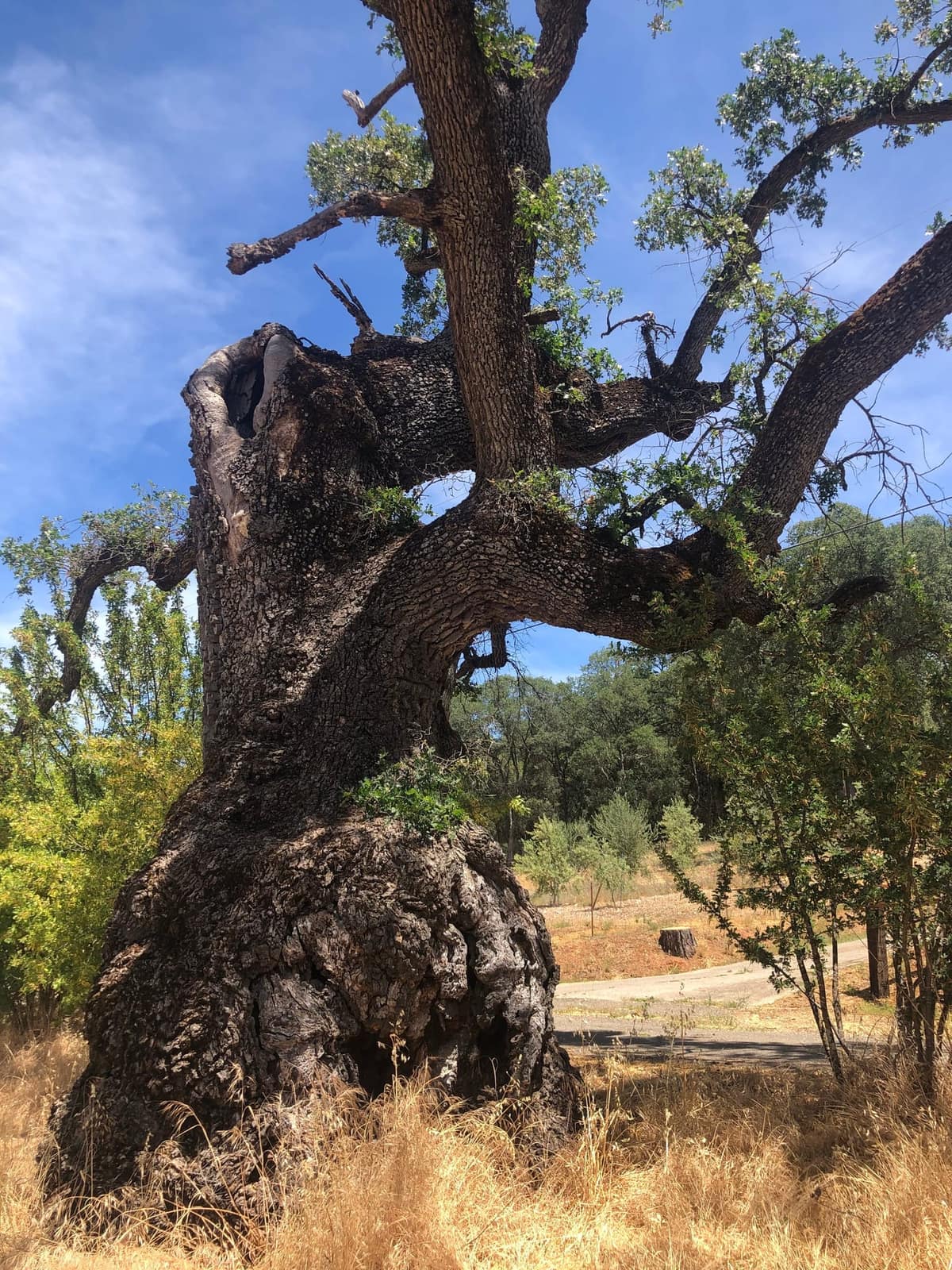
Here is the fact that surprises almost everyone who asks me what trees are protected in California: there is no single statewide law that protects trees on private property. Protection is a patchwork of local ordinances, written city by city and county by county, and the rules genuinely change when you cross a boundary. A tree you could remove freely on one side of a road can carry a permit requirement and restitution exposure on the other. So the first question is never what does California allow. It is always whose rules apply to your parcel.
Who actually protects trees here
Tree protection in California runs through three layers, and the middle one does nearly all the work:
- Local ordinances. Cities and counties each write their own tree protection rules: which species are covered, at what trunk size, what needs a permit, and what it costs to get it wrong. This is the layer that decides most real world cases.
- State law, in specific places. The California Environmental Quality Act requires counties to address impacts to oak woodlands when projects convert them, and defensible space law can require vegetation clearance around homes in designated fire hazard areas, which cuts the other way.
- Public trees. Street trees, park trees, and trees on public land belong to the city or county that owns the ground, and pruning or removing one is generally that agency's call, not the adjacent owner's.
One terminology note. If you have seen the phrase tree preservation order, that is a mechanism from law in the United Kingdom. California does not issue tree preservation orders; the equivalent instrument here is the local tree preservation ordinance.
How different the local rules really are
The variation is not trivia, it decides outcomes. A few examples from jurisdictions I work in, each linked below to its actual code:
- El Dorado County protects native oaks at six inches diameter for a single trunk, or ten inches across the three largest stems of a multi trunk oak, and designates oaks of thirty six inches and up as Heritage Trees. Remove a protected oak without approval and restitution can reach three times the market value of the replacement trees, and nine times for a Heritage Tree.
- Auburn's ordinance protects far more than oaks: madrone, buckeye, cedar, and pine are all covered species in the city's code.
- Rocklin measures multi trunk oaks by the largest trunk only, the opposite of El Dorado County's add the three largest rule. The same tree can measure in or out of protection depending on which side of the county line it grows on.
- Parts of Placer County around Granite Bay sit in named woodland conservation areas with a five inch oak threshold, tighter than the county's neighbors.
- The City of Sacramento runs its own permit system for private protected trees under its city code.
Every one of those rules is current as of this writing, and every one of them has changed before. When a real decision rides on it, the ordinance gets checked on the day, which is part of what you are paying an arborist for.
What heritage tree means, and does not mean
Heritage tree is not a statewide category. It is a designation each jurisdiction defines for itself, usually by size, species, or historical significance, and it typically carries the strictest protection and the heaviest penalties in that jurisdiction's code. In El Dorado County it means a native oak of thirty six inches or more. Other cities set different bars entirely. If someone tells you a tree is a heritage tree, the useful follow up is always: under whose ordinance, and at what threshold?
Where fire law cuts the other way
Tree protection in California coexists with a body of law pushing in the opposite direction. Public Resources Code section 4291 requires defensible space around structures in State Responsibility Areas and Very High Fire Hazard Severity Zones, and local fire authorities enforce clearance standards of their own. The two systems are reconciled tree by tree: defensible space is achieved through spacing, pruning, and removing dead fuel, not by clearing every protected oak on a parcel, and an assessment that addresses both the ordinance and the fire requirement is exactly the document that keeps a project out of trouble with either authority.
What this means if you are planning work
The sequence that avoids expensive mistakes is short. Identify the species and measure the trunk the way your jurisdiction measures it, before any design is fixed or any cutting is scheduled. Find out whose rules apply, city or county, and whether an overlay like a conservation area or an HOA sits on top. Where a protected tree is affected, get the report the reviewing agency expects, prepared by someone who knows what that reviewer looks for. I prepare those reports across El Dorado, Sacramento, Placer, and Amador counties, and the local pages below go deeper on each jurisdiction I work in most.
California tree law sources
- El Dorado County Zoning Ordinance Chapter 130.39, Oak Resources ConservationThe county oak ordinance: thresholds, Heritage Trees, exemptions, and restitution.
- Public Resources Code 21083.4, oak woodlandsThe CEQA statute requiring counties to address oak woodland conversion.
- Public Resources Code section 4291The defensible space requirement that pushes the other way in fire country.
- Auburn Municipal Code Chapter 161, Tree PreservationAuburn's ordinance, protecting madrone, buckeye, cedar, and pine as well as oaks.
- Rocklin Municipal Code Chapter 17.77, Oak Tree PreservationRocklin's oak ordinance, with its largest trunk measurement rule.
- Placer County Code Article 19.50, Woodland ConservationPlacer County's woodland conservation rules, including the named conservation areas.
- City of Sacramento City Code 12.56, Tree PermitsSacramento's private protected tree permit system.
- Folsom Municipal Code Chapter 12.16, Tree PreservationFolsom's tree preservation ordinance.
Frequently Asked Questions
What trees are protected in California?
Whichever trees your local ordinance says, which is why there is no one answer. Native oaks are the most commonly protected group across Northern California, but covered species, size thresholds, and permit triggers are set city by city and county by county, and some ordinances reach well beyond oaks. The reliable method is to identify the species, measure the trunk, and read your own jurisdiction's ordinance, or have someone qualified do all three.
Can I cut down a tree on my own property in California?
Often yes, sometimes no, and the difference is entirely local. If the tree is not a species your jurisdiction protects, or is under its size threshold, removal is usually your call. If it is protected, removal without approval can bring restitution that dwarfs what doing it properly would have cost, up to nine times replacement value for a Heritage Tree in El Dorado County. Measure first, then decide.
Is trimming a protected tree allowed?
Frequently yes, and it is one of the most common surprises in this area of law. El Dorado County, for example, allows trimming a native oak by right. But jurisdictions differ, some regulate major pruning of protected trees, and bad pruning can harm a tree no ordinance will save. Check the local rule before major work, and prune to arboricultural standards regardless.
What is a tree preservation order in California?
It is not a California instrument. Tree preservation orders are a mechanism from UK planning law. What California has instead are local tree preservation ordinances, adopted city by city and county by county, which do the equivalent work of designating protected trees and requiring permits to remove them.
Who enforces tree protection?
The jurisdiction that wrote the ordinance, usually through its planning or community development department, with penalties assessed as restitution, fines, or conditions on your permit. Public trees are enforced by the agency that owns them. And in practice, enforcement very often starts with a neighbor's phone call, which is worth remembering before cutting first and checking later.