Fungi drive so many of the positive and negative outcomes in tree health and viability, yet most tree assessments stop at a guess about what is growing on the trunk. I take it further. I am Christopher Hodge, an ISA Board Certified Master Arborist, WE-14385B, and TRAQ qualified, working out of Placerville. With over fifteen years studying fungal taxonomy and forest ecology, I identify the organism, explain the decay or disease it causes, and document it all in a fully cited written report you can rely on. Independent consulting arborist, no removal crews, no stake in whether a tree comes down.
Why the Name of the Fungus Decides Everything That Follows
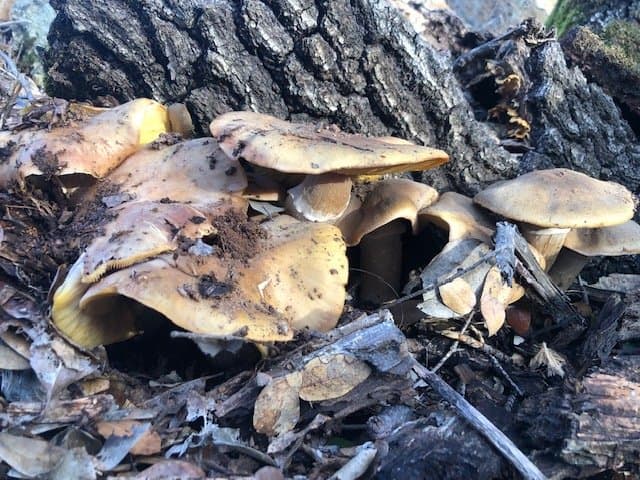
A fungus on a tree is not a verdict. It is a question, and the answer changes completely depending on which organism you are looking at. One species is recycling a branch that died five years ago. Another is quietly consuming the cellulose in the wood that holds the trunk up. The University of California Statewide Integrated Pest Management Program makes the stakes clear in its Pest Notes on wood decay fungi in landscape trees, ANR Publication 74109 by Downer and Perry: a loss of only about 10 percent of wood weight to decay can cost the wood something in the range of 70 to 90 percent of its strength. The same publication notes that a visible fruiting body usually signals decay that is already advanced, with an extent that can run far above or below where the conk appears. A conk is a late signal, and it does not map the decay column for you.
What I See in the Sierra Nevada Foothills
Fungal pathology reads differently depending on where you are standing. The organisms I work up across El Dorado, Placer, Amador, and Sacramento counties are shaped by a foothill climate of wet winters and long dry summers, and by the species that grow in it: blue oak and interior live oak on the dry slopes, valley oak on the deeper soils, California black oak through the middle elevations, and ponderosa pine, gray pine, incense cedar, and Douglas fir above them.
Biscogniauxia mediterranea is the one I most want people to recognize, because it is routinely misread. It causes charcoal canker, and on blue oak in these foothills it behaves as a latent endophyte, living quietly inside healthy sapwood and turning pathogenic only once the tree is under water stress. The sign is unmistakable once you have seen it. Bark sloughs away in plates and exposes a hard carbonaceous crust underneath, silver gray at first and then a sooty black, which is the fungus fruiting through tissue it has already killed.
That distinction is the whole job. When a blue oak outside Placerville or Shingle Springs shows charcoal canker, the fungus is the visible sign and the drought stress is the underlying cause. There is no spray that fixes it, and anyone selling you one has skipped the diagnosis. What changes the outcome is the water relationship, the grade around the root collar, and whether the tree was already carrying an injury before the dry years arrived.
Alongside it I regularly work up Armillaria mellea at the root crown of oaks, Ganoderma at the base of older shade trees, Heterobasidion root and butt rot in ponderosa pine and white fir, and Cryptoporus volvatus on pines that bark beetles have already killed. Just as often the work is ruling something out. Phytophthora ramorum, the sudden oak death pathogen, is a coastal problem that is not established in El Dorado County, but it is the first thing a worried owner names, and a documented negative is worth having in writing.
What the Report Includes
Every fungal pathology report I prepare is built around evidence, not assumption. You receive:
- Identification of the organism, to species where the evidence allows and to genus or group where it does not
- Microscopy of spores, hyphae, and other diagnostic structures, with measurements
- The type of decay or disease the organism causes and how it progresses
- What that decay means for the tree's structure, health, and risk
- Management options grounded in the biology of the specific organism
- A plain statement of the limits of the finding, including what the evidence does not establish
- Citations to the mycological and arboricultural literature behind every conclusion
Microscopy and Identification
Many wood decay fungi and pathogens cannot be identified by eye. A photograph of a conk or a fruiting body is a starting point, not an answer. I take cross sections of affected tissue, mount representative samples in 10% KOH and in stains such as lactophenol cotton blue and Congo red to bring out structure, and examine them under the microscope at magnifications up to 1000x.
Each preparation does a different job. Potassium hydroxide rehydrates dried material and clears pigment so cell walls can be read. Lactophenol cotton blue stains chitin in the fungal wall, lifting hyphae and spores out of a background of plant tissue. Congo red outlines wall structure and makes septa, clamp connections, and spore ornamentation legible. None of them is a test for a species. They make structure visible so it can be measured and compared.
I measure spores in micrometers and study the features that separate one species from another: spore shape, size, and ornamentation, the structure of the hyphae, and the form of the fruiting bodies. I then compare what I see against published descriptions, because the name of the organism determines everything that follows.
What Microscopy Can Establish, and What It Cannot
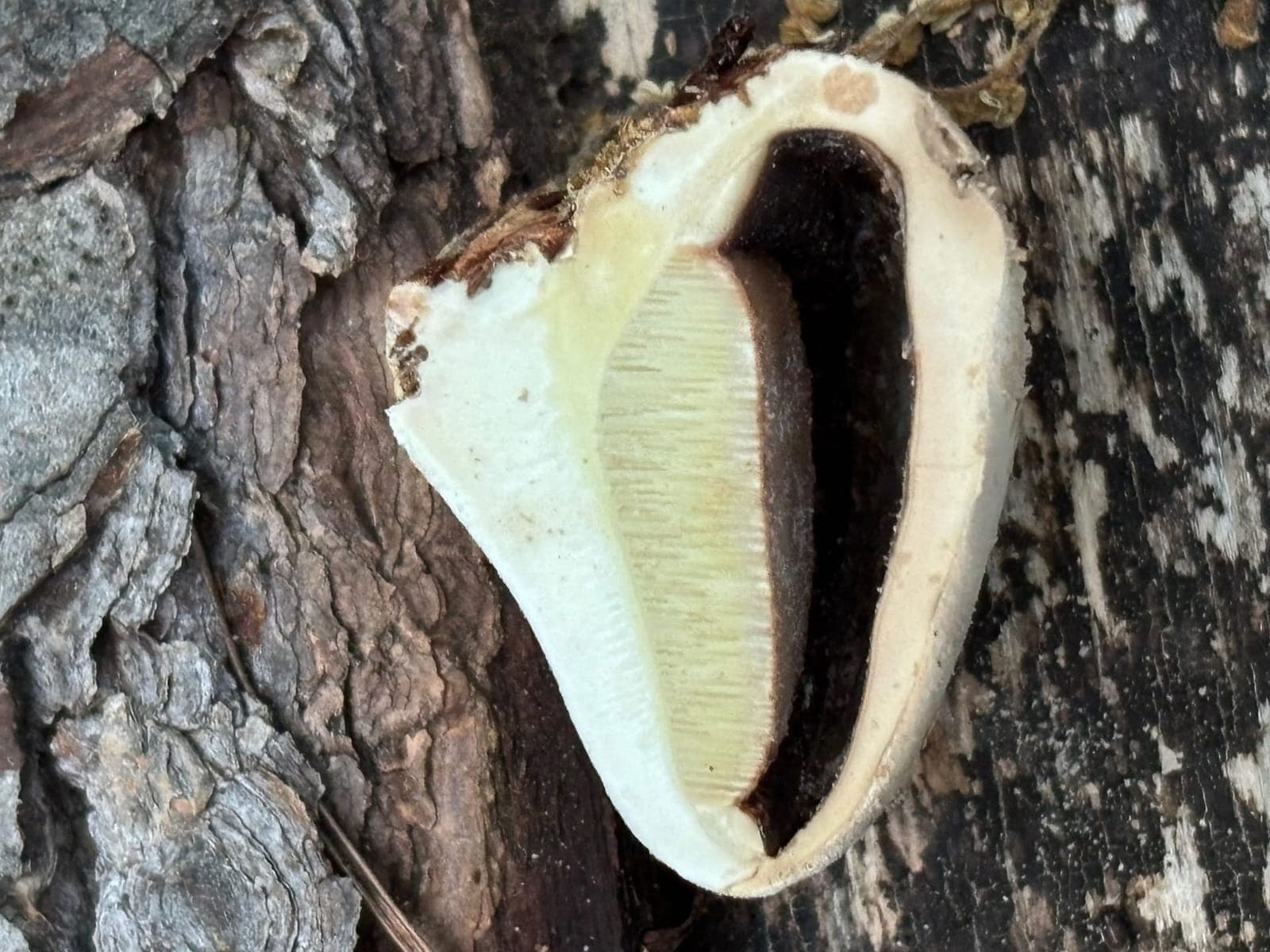
Microscopy is very good at a narrow set of questions. It can tell you whether the structure in front of you is fungal at all, which is not always obvious in weathered bark or discolored wood. It can separate an ascomycete from a basidiomycete by the way spores are borne. It can place a specimen in a genus, and in many groups carry the identification to species when the spores are distinctive in size, shape, wall thickness, or ornamentation. It can also establish that a specimen is sterile or immature and that no confident name is available yet, which is a real result and belongs in a report.
Microscopy cannot tell you how far a decay column extends inside a trunk, how much sound wood remains, or when a limb will fail. It cannot prove that the organism you identified caused the symptom you were called about, only that it is present. And it cannot assign a dollar value to a tree. Where a litigated or insurance dispute turns on a dollar figure, that portion is referred to a Tree and Plant Appraisal Qualification holder.
What a Finding Looks Like
Here is an excerpt from a recent palm report, with the client details removed:
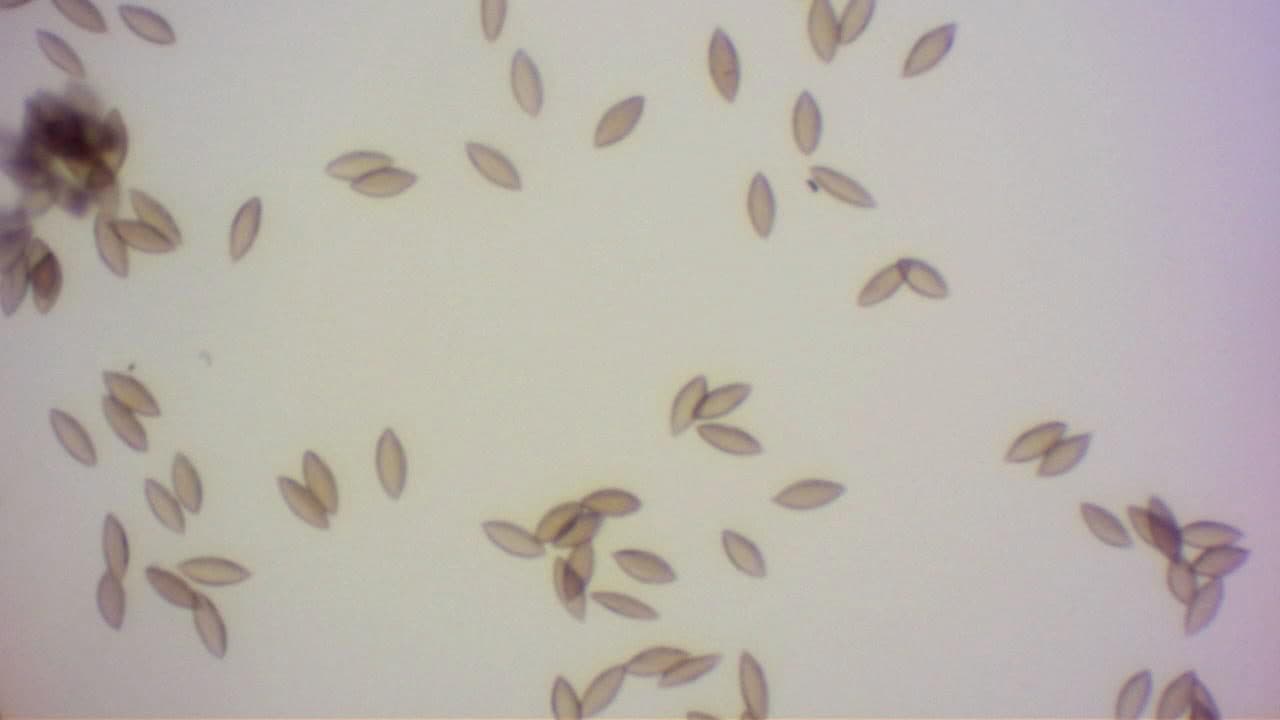
Brown, oblong spores approximately 20 µm long and 8 µm wide, with apiculate ends, were observed in the fruiting structures. Based on spore morphology and comparison with published descriptions, the pathogen was identified as Cocoicola californica, a fungus associated with petiole blight of palms.
When There Are No Fruiting Structures, I Culture
Sometimes the diagnostic structures simply are not present on the sample. When that happens, I culture necrotic tissue on malt extract agar or potato dextrose agar in sterile Petri dishes, incubate it, and identify the fungi that grow out, carefully separating the organism developing directly from the tissue from the airborne contaminants that land on a plate. In one maple case, culturing necrotic leaf segments recovered a Fusarium species growing directly from the affected tissue rather than from airborne contamination. Some Fusarium species cause vascular wilts, but establishing that would require sampling xylem, identifying the fungus to species, and satisfying Koch's postulates. So the result is reported for what it is, a documented lead that a field inspection alone would have missed, and not as a confirmed wilt diagnosis.
What a Culture Result Proves, and What It Does Not
Culture recovers a living organism from tissue that shows no fruiting structures, which microscopy alone often cannot do. It also carries its own limits, and a report that hides them is not worth much. Plating necrotic tissue tells you a fungus was present in or on that tissue. It does not tell you the fungus caused the necrosis. Trees carry large communities of endophytes and surface fungi that grow readily on agar, and plates catch airborne spores from the room, so the origin of each colony matters and several pieces from the margin of healthy and affected tissue tell you more than one lucky plate.
Causation is a higher bar. Koch's postulates require isolating the organism from a diseased plant, growing it in pure culture, inoculating a healthy plant of the same species and reproducing the disease, then recovering the organism again. That is a research program, not a site visit. A second limit is anatomical: a vascular wilt lives in the xylem, so a culture from leaf tissue is looking in the wrong place. A third is taxonomic. Genus level identifications from culture morphology are often solid, while species in complexes such as Fusarium frequently require sequencing that I do not perform. When that is the situation, the report says so.
A Fully Cited Report
Anyone can offer an opinion. I show my work. Every report ends with a Sources section citing the peer reviewed research, mycological references, and diagnostic resources behind the identification and the recommendations. The regional backbone of that list is usually the US Forest Service field guide to the insects and diseases of California oaks, General Technical Report PSW-GTR-197 by Swiecki and Bernhardt, together with the relevant University of California Pest Notes and the primary literature for the organism itself. That matters when the report goes to a permit reviewer, an insurer, an attorney, or another arborist who wants to check the reasoning. You are not asked to take my word for it. You are given the references to check it.
How the Report Is Organized
Every report follows the same clear structure:
- Scope: the trees, the symptoms, and who collected the samples and when
- Methods: how the tissue was examined, mounted, stained, or cultured
- Findings: the microscopic evidence and the organism identified
- Analysis: what the organism means in the context of the site and symptoms
- Limitations: what the sampling and the methods could not establish
- Conclusion: a plain statement of the diagnosis and recommended next steps
- Sources: the literature and references behind the conclusions
Why the Organism Matters for Risk
Not all wood decay is the same. Brown rot, white rot, and soft rot weaken wood in fundamentally different ways and progress at different rates. White rot fungi degrade lignin as well as cellulose and leave wood spongy or stringy. Brown rot fungi consume mainly cellulose and hemicellulose and leave a dry, crumbly, cubical residue that loses strength quickly and can fail in a brittle break. Soft rot is the work of certain fungi that erode cavities within the secondary cell wall, usually in wet surface layers, and it advances slowly compared with the wood rotting basidiomycetes. A tree with one kind of decay may stay sound for years, while a cavity of the same size caused by another organism can mean imminent failure.
Identifying the fungus tells you what kind of strength loss to expect and how fast. It does not tell you how much of the cross section is gone. That question belongs to the risk assessment, where the decay is located and weighed against the targets below the tree. This is where a pathology report and a TRAQ tree risk assessment work together.
Root and Butt Decay Is a Different Question
Decay at the root crown deserves separate treatment because it attacks the wood that resists overturning, and because the signs sit below the mulch line rather than on the trunk. Armillaria root rot is the case I see most. The US Forest Service field guide to California oaks states the diagnostic combination directly: root decay together with both the white fan shaped mycelial plaques under the bark and the dark rhizomorphs on the roots is normally enough to diagnose Armillaria mellea root rot in California oaks. The University of California Pest Notes on Armillaria, ANR Publication 74171, describes the same signs, the excavation of roughly twelve to eighteen inches needed to find them, and the practical reality that there are no registered fungicides for Armillaria control.
That is worth sitting with. For several of the most damaging root and decay organisms there is no chemical answer at all, so a diagnosis does not unlock a treatment. It tells you what will happen and how fast, which is what you need in order to decide about a tree near a house or a driveway.
Ruling Things Out Is Part of the Work
A good diagnosis also clears a tree of what it does not have. The University of California Pest Notes on Phytophthora root and crown rot, ANR Publication 74133, points out that mycelial fans and fungal filaments in the tissue indicate Armillaria rather than Phytophthora, which is the distinction that changes the management advice. University of California guidance on oak branch canker and dieback notes that Diplodia outbreaks follow years of below average rainfall. Sudden oak death deserves naming plainly, because it is the disease people arrive already worried about. It is caused by Phytophthora ramorum, it is chiefly a coastal problem, and the University of California Pest Notes on it, ANR Publication 74151, is explicit that it requires laboratory confirmation rather than symptom reading. It is not established in the Sierra Nevada foothills or the Sacramento Valley, and neither El Dorado nor Placer County is a regulated county for it.
The Standards a Report Is Prepared To
There is loose talk in this trade about reports written to ANSI standards, so it is worth being precise. ANSI A300 covers tree care operations, the work itself. ANSI Z133 is the separate standard for safety and health requirements in arboricultural operations. Neither is a reporting standard. My reports are prepared to International Society of Arboriculture best management practices, and risk work follows the ISA framework and its levels: level 1 limited visual, level 2 basic, level 3 advanced. TRAQ is a qualification rather than a certification, earned by course and assessment and renewed on a seven year cycle.
Who This Service Is For
- Homeowners who want to know what is really happening inside or beneath a valued tree
- Consulting and practicing arborists who need a second set of eyes and a microscope on a tough diagnosis
- Property managers and HOAs documenting tree health and risk
- Attorneys and adjusters who need a defensible, cited diagnosis for a claim or dispute
For Fellow Arborists
Part of my work is helping other arborists understand fungi better, so the trees in their care get better decisions. If you have a fruiting body you cannot place, an unusual decay pattern, or a diagnosis you want confirmed before it goes in a report, I am glad to take it on.
Submit a Sample or Schedule a Site Visit
A conk on the trunk is not automatically a death sentence, and that distinction has a price on it. Removal of a medium sized tree near a structure commonly runs $1,500 to $4,000. Some decay fungi hollow a stem slowly enough that a sound shell holds for years under monitoring, while others take the structural roots and give very little warning. Identifying the organism is what tells you which situation you are in before you pay for the chainsaw.
Call or text (530) 391-6100 or use the contact page to discuss your tree, a sample, or a diagnosis you need confirmed. A site assessment with a written report starts at $500. The site visit on its own is $250 and covers up to one hour on site. Larger or more complex work is quoted before anything is scheduled. I serve El Dorado, Sacramento, Placer, and Amador Counties, and I take on the right projects beyond that area.
Frequently Asked Questions
How do I collect and send a fungal sample?
Call or text first so I can tell you what to collect for your specific symptom. In general, a fresh fruiting body or a section of affected tissue, kept cool and dry in paper rather than plastic, preserves the diagnostic structures. For decay inside a standing tree, a site visit usually works better than a mailed sample.
Can you identify a fungus from a photo?
Sometimes, but a photo is a starting point, not an answer. Many wood decay fungi and pathogens look similar and can only be separated under a microscope by spore shape, size, and ornamentation. When a confident identification matters for a report, an insurer, or a court, I examine the actual specimen rather than relying on an image.
Is a fungus on my tree always a problem?
No. Many fungi on and around trees are harmless saprotrophs or beneficial mycorrhizal partners that help the tree take up water and nutrients. Others are aggressive wood decay organisms or vascular pathogens. The point of identifying the species is to tell a harmless fungus apart from one that threatens the tree.
Can a lab result tell me whether my tree is going to fail?
No, and any report that says otherwise is overreaching. Identifying the organism tells you what kind of strength loss to expect and roughly how fast. Whether a specific tree is likely to fail depends on how much sound wood remains, where the decay sits, the loading, and what is below it. That is a tree risk assessment question, and the pathology report feeds into it rather than replacing it.
Will you recommend a fungicide for a decay fungus?
No. I hold a California Qualified Applicator License and can apply control materials, but I do not hold a Pest Control Adviser license, so issuing a written pesticide recommendation is not a function I perform. It is also usually beside the point. For several of the most damaging organisms, including Armillaria, the University of California notes that no registered fungicide provides control, so the useful answer is cultural and structural rather than chemical.
What does the report cost, and do you provide a tree value?
A site assessment with the written report starts at $500, and the site visit on its own is $250 for up to one hour on site. Larger or more complex work is quoted before anything is scheduled. A pathology report does not assign a dollar value or a damages figure, and where a litigated or insurance dispute turns on valuation, I refer that portion to a Tree and Plant Appraisal Qualification holder.
University of California and USDA references
- UC IPM Pest Notes: Wood Decay Fungi in Landscape TreesUniversity of California ANR Publication 74109, by Downer and Perry, on white, brown, and soft rots, what a fruiting body indicates, and why wound dressings are not recommended.
- UC IPM Pest Notes 74109, full textThe same University of California Pest Notes on wood decay fungi, including the figure that a 10 percent loss of wood weight can cost 70 to 90 percent of wood strength.
- UC IPM Pest Notes: Armillaria Root RotUniversity of California ANR Publication 74171 on mycelial fans, rhizomorphs, and why there are no registered fungicides for Armillaria control.
- UC IPM Pest Notes: Phytophthora Root and Crown RotUniversity of California ANR Publication 74133, including how to separate Phytophthora from Armillaria in the field.
- UC IPM: Oak Branch Canker and DiebackUniversity of California guidance on Diplodia quercina and Diplodia corticola, and how outbreaks follow years of below average rainfall.
- UC IPM Pest Notes: Sudden Oak DeathUniversity of California ANR Publication 74151 on Phytophthora ramorum, a chiefly coastal disease that requires laboratory confirmation.
- USDA Forest Service, A Field Guide to Insects and Diseases of California OaksGeneral Technical Report PSW-GTR-197, Swiecki and Bernhardt, Pacific Southwest Research Station, 2006. The standard regional reference for oak pests and pathogens.
Standards and qualifications referenced
- ISA store: standards and best management practicesWhere the ANSI A300 tree care standards, ANSI Z133 Safety and Health Requirements for Arboricultural Operations, and the ISA Best Management Practices series are published.
- ISA Tree Risk Assessment QualificationThe International Society of Arboriculture page describing TRAQ as a voluntary qualification, earned by course and assessment and renewed every seven years.
- ISA, Managing Tree Hazards and RisksInternational Society of Arboriculture guidance on tree risk inspection and on using an arborist who is ISA Tree Risk Assessment Qualified.
Sources
- Downer, A.J. and Perry, E.J. Pest Notes: Wood Decay Fungi in Landscape Trees. University of California Agriculture and Natural Resources Publication 74109, updated 2019.
- Swiecki, T.J. and Bernhardt, E.A. 2006. A Field Guide to Insects and Diseases of California Oaks. General Technical Report PSW-GTR-197. Pacific Southwest Research Station, Forest Service, U.S. Department of Agriculture.