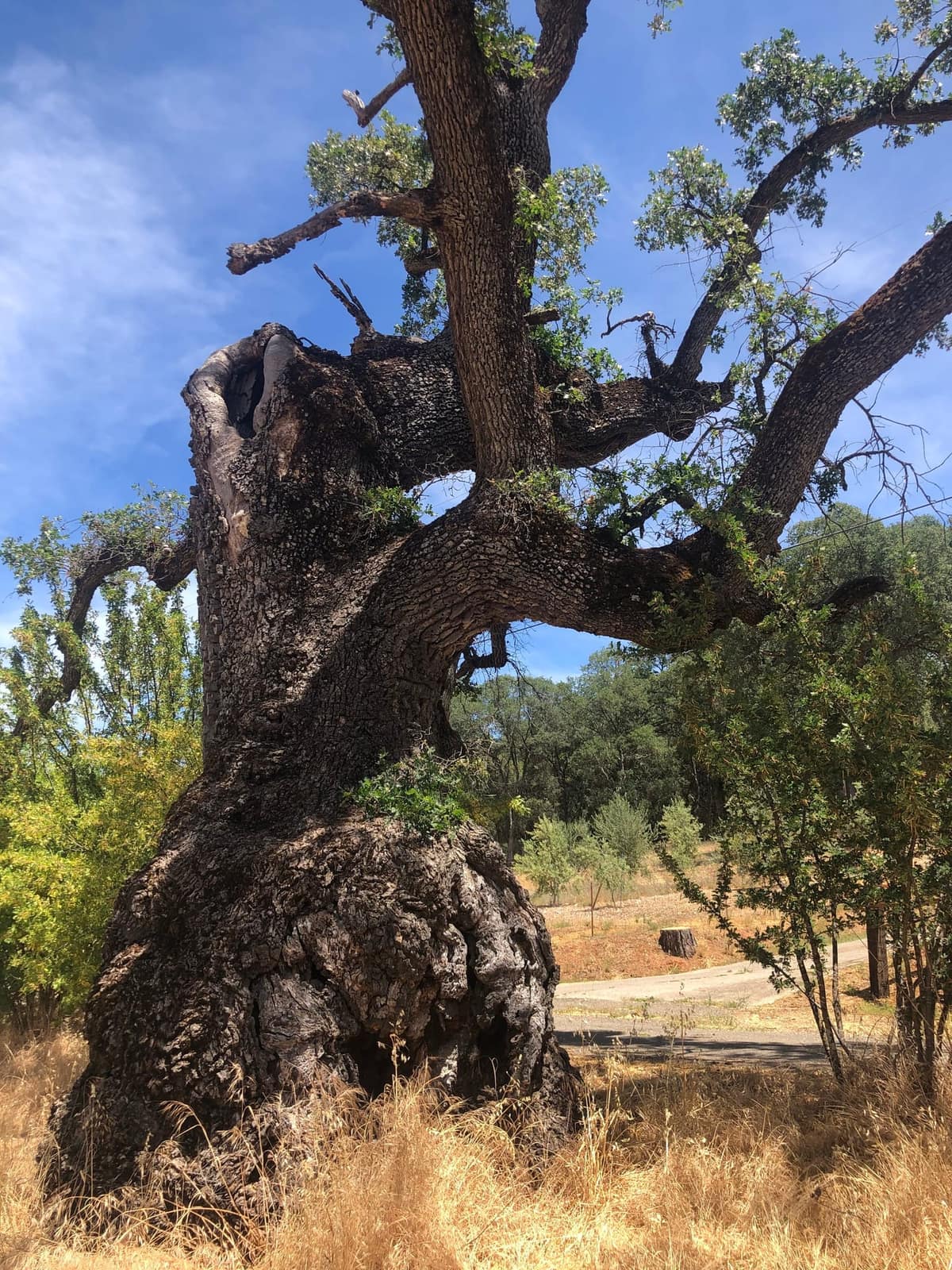
In El Dorado County you usually cannot remove a healthy native oak without going through the county's oak resource review first, and many projects that affect native oaks require an arborist report or an Oak Technical Report before the county will issue a permit. I am Christopher Hodge, an ISA Board Certified Master Arborist based in Placerville, and I prepare oak reports to the standard El Dorado County reviewers expect. Independent consulting arborist, no removal crews, no stake in whether a tree comes down.
Which of these do you actually need?
Two things get confused here constantly, so here is the plain division. This page covers permission and the ordinance behind it: which oaks El Dorado County protects, how it measures a tree, what is exempt, and what it takes to get approval to remove a protected oak. If your project is already moving and the county has asked for the site specific report that goes with it, that is the Oak Technical Report, which has its own page.
El Dorado County tree removal permits center on oaks
If you need an El Dorado County tree removal permit, or what some people call a tree cutting permit, here is the key point. In the unincorporated county, tree removal permitting is driven almost entirely by the Oak Resources Conservation Ordinance, which is the county's tree ordinance for native oaks. There is generally no separate permit to remove an ordinary, non protected tree, but removing or impacting a protected native oak, especially as part of a grading or building project, does require review and usually an Oak Technical Report. So the practical question is almost always whether your tree is a protected native oak.
All of that applies to private land in the unincorporated county at or below 4,000 feet. Placerville and South Lake Tahoe are incorporated cities with their own tree rules, and in the Lake Tahoe Basin tree removal goes through the Tahoe Regional Planning Agency, not the county oak ordinance. If you are not sure which one covers your parcel, I can sort that out before you file anything.
Do I need a permit to remove an oak tree in El Dorado County?
In most cases involving a native oak, yes, or at least a documented review. El Dorado County protects native oaks and oak woodlands through its Oak Resources Conservation Ordinance, which generally applies to native oaks six inches in diameter and larger, or multi trunk oaks whose three largest trunks total more than ten inches. Whether your situation needs a full Oak Technical Report, a simpler arborist report, or qualifies for an exemption depends on the tree, the parcel, and what you are doing on the property. The county Planning and Building department makes the final determination, and the most common trigger is a grading or building permit near protected oaks. Confirm the current thresholds and requirements with the county, because oak ordinances are updated over time.
Which oaks does the ordinance protect?
The ordinance protects California native oaks. In El Dorado County those are typically:
- Blue oak (Quercus douglasii)
- Valley oak (Quercus lobata)
- Interior live oak (Quercus wislizeni)
- Canyon live oak (Quercus chrysolepis)
- California black oak (Quercus kelloggii)
Non native ornamental oaks are usually treated differently. Part of my job is confirming the species and trunk size so you know exactly which trees the ordinance covers.
What size makes an oak protected
Species is only half of it. The other half is a number, and it is the number that decides whether you need to ask the county at all. A single trunk native oak is protected at six inches in diameter and above. A multi trunk oak is protected when its three largest trunks add up to more than ten inches.
Diameter is measured at four and a half feet above the ground, which arborists call diameter at breast height, and on sloping ground it is taken from the uphill side. A great deal of this county is on a slope, so that last detail decides real cases. Measure from the downhill side of a trunk standing on a grade and you will read high, which can put a tree inside the ordinance that does not belong there.
If your trees are anywhere near these numbers, get them measured before you commit to a layout or a removal date, not after. Minor trimming of a native oak, by contrast, done to current ANSI standards, does not need county approval, but trimming that substantially reduces the size or density of the tree, or alters its natural shape, is not minor trimming and needs a permit, and bad pruning can still cost you the tree.
Heritage Trees, and why they carry three times the exposure
A native oak of thirty six inches in diameter or greater, or a multi trunk oak whose three largest trunks total thirty six inches or more, is a Heritage Tree, and it is a different proposition entirely. These are the oaks that were standing before the county had a general plan, and the ordinance prices them accordingly. Removing or damaging one without approval can bring fines of up to nine times the market value of the replacement trees, against up to three times for other protected oaks.
That is the single most expensive mistake available on a residential parcel in El Dorado County, and it is usually made by somebody who did not know the tree was in a protected class at all. If there is a large oak anywhere near your work, have it measured first. The measurement costs very little next to what the ordinance charges for getting it wrong.
Exemptions worth knowing before you call anyone
Not every oak on every parcel triggers a permit. The ordinance sets out exemptions that cover a lot of ordinary situations, including fire safe work under an approved Fire Safe Plan or routine defensible space maintenance, trees downed or damaged by storms and other natural disasters, utility line maintenance, agricultural activities, and emergency work. Dead, dying, or diseased trees are exempt outright only when a fire official documents them to the county as hazardous vegetation. Otherwise they still need a permit, with the mitigation waived once a Certified Arborist or Registered Professional Forester certifies the condition in writing. The same goes for the personal use allowance of no more than eight trees, and no more than 140 inches of trunk diameter, per parcel per year, which never covers a Heritage Tree or a valley oak.
Two points that catch people out. Minor trimming of an individual native oak, done to current ANSI standards, needs no permit, so ordinary pruning is not the problem people assume it is. Heavy pruning is: trimming that substantially reduces the size or density of the tree, or alters its natural shape, is not minor trimming under the ordinance and needs a permit. And apart from trees that are dead, dying, diseased, or storm damaged, impacts to Heritage Trees, to individual valley oaks, and to valley oak woodland are not exempt. Those must be mitigated whether or not a county permit is otherwise required, which puts valley oak alongside Heritage Trees as the strictest categories in the ordinance.
Removing a tree as dead, dying, or diseased is not a self certification. The county expects written certification from a Certified Arborist or a Registered Professional Forester, and it specifically pushes back on mistletoe as a justification. Heavy mistletoe alone does not make an oak diseased, and the county asks for a real explanation of why corrective work such as pruning the mistletoe out is not feasible before it will accept removal.
Dead, dying, and hazardous oaks
There are generally provisions for oaks that are dead, dying, or genuinely hazardous, and this is the most common reason people believe they can skip the process. Sometimes they are right. Often the trouble is that the determination was made by the person who wanted the tree gone.
An oak that has dropped its leaves early, or that is thinning on one side, or that has a fungus at the base, is not necessarily dead or dying, and several of those conditions are recoverable. A tree that is genuinely dead is usually straightforward to document. The cases that go wrong are the ones in between, where a stressed but living oak came down on somebody's own judgment and the county later disagreed. At that point the exemption is not available, and the fines are.
What protects you is documentation made before the saw comes out: an assessment by a qualified arborist recording the condition, the evidence, and the reasoning, with photographs. If the concern is that the tree could fail and hit something, that is a risk assessment rather than a health question, and it is a separate piece of work. Either way, confirm the exemption with Planning and Building before you act rather than after.
When a removal needs an Oak Technical Report
The county asks for an Oak Technical Report with every oak removal permit application, and for larger projects, such as grading, subdivisions, or anything with broader oak woodland impact, it is a substantial document. An Oak Technical Report inventories the native oaks, measures the impacts, and lays out how those impacts will be avoided, minimized, or mitigated, often through preservation, replacement planting, or an in lieu fee. I prepare these to the county's standards.
The ordinance follows a familiar conservation sequence. First, design the project to avoid protected oaks where you can. Second, minimize the impact on the oaks you keep by protecting their root zones during construction. Third, mitigate the loss that remains, usually through a conservation easement, replacement planting, or payment of an in lieu fee into the county's Oak Woodland Conservation Fund. An Oak Technical Report documents how a larger project meets these requirements.
How the oak permit process usually works
Every project is a little different, but the path is usually:
- Confirm whether protected native oaks are present and measure their trunk diameter.
- Have an ISA Certified Arborist inventory and assess the oaks and the proposed impacts.
- The arborist prepares the required document, an arborist report or an Oak Technical Report, with findings and mitigation.
- Submit the report with your permit application to El Dorado County Planning and Building.
- The county reviews and may require mitigation such as preservation, replacement planting, or in lieu fees.
- The permit is issued once the oak requirements are satisfied.
What happens if you remove an oak without a permit?
Removing a protected oak without the required review can stall or jeopardize your project and expose you to county fines of up to three times the market value of the replacement trees, and up to nine times for a Heritage Tree. If an oak is genuinely dead, dying, or hazardous, the mitigation is usually waived, but you typically still need the permit and a Certified Arborist's written documentation rather than removing it on assumption. When in doubt, get it assessed before the saw comes out.
Where the number in a tree ordinance comes from
It is worth knowing that none of this is new, and that the mechanism has barely changed in three hundred and thirty five years. One of the earliest tree protection laws in America was written into the charter granted to the Province of Massachusetts Bay in 1691, under William and Mary, and it reserved standing timber for the Royal Navy:
all Trees of the Diameter of Twenty Four Inches and upwards of Twelve Inches from the ground growing vpon any soyle or Tract of Land within Our said Province or Territory not heretofore granted to any private persons
Felling one without a royal license carried a penalty of one hundred pounds sterling per tree, a sum no colonial sawyer could have paid, which was the point. The purpose was stated plainly in the charter as providing masts for the Royal Navy, and because the tall eastern white pine was the finest mast timber in the world, the policy is remembered as a white pine law. The charter clause itself is broader than that and simply says trees.
Look at what that clause is actually made of, because El Dorado County's ordinance is made of the same four parts. There is a diameter threshold, twenty four inches then and six inches now. There is a specified height at which the diameter is measured, twelve inches from the ground then and four and a half feet now. There is a class of land the rule does not reach, ground already granted to private persons then and the ordinance exemptions now. And there is a penalty set per tree, one hundred pounds sterling then and fines of up to three or nine times replacement value now.
The reason the shape has survived is that the underlying problem has not changed. A large tree is worth more standing than the wood in it, it takes generations to replace, and it can be removed in a morning by one person acting alone. Trunk diameter is a crude proxy for how long a tree took to get there, and most ordinances since have reached for the same proxy because nothing better has been found. So when the county sets six inches, or thirty six for a Heritage Tree, it is not arbitrary paperwork. It is a rough measurement of time, and the fine is the county's estimate of what that time is worth.
How I help
I inventory and assess your oaks, confirm the species and size, and prepare the report El Dorado County requires, written the way reviewers expect so your permit is not delayed by a document that misses the mark. Because I run no removal crews, I have no stake in whether a tree comes down, so my assessment sometimes saves a healthy oak and sometimes confirms that removal is the right call.
Frequently Asked Questions
Can I remove a dead or hazardous tree without a permit?
There are provisions for dead, dying, or hazardous trees, but under the current ordinance you usually still need an oak tree removal permit, with the mitigation waived once a Certified Arborist documents the condition in writing, and you should confirm with El Dorado County before acting. A written tree risk assessment is the cleanest way to document that an oak is genuinely hazardous.
How much does an oak removal report cost?
It depends on the number of oaks, the site, and whether the county requires a full Oak Technical Report or a simpler arborist report. I give a fee estimate after a short conversation about your project. Call or text (530) 391-6100.
How long does the report take?
For most projects I complete the site visit and deliver the report within a couple of weeks. County review timelines are separate and vary with the department's workload, so it is worth starting early if you have a permit deadline.
Do I need a permit to remove a tree in El Dorado County?
It depends on the tree. El Dorado County's tree permitting is built around protected native oaks. If the tree is a native oak of six inches in diameter or larger, or a multi trunk oak whose three largest trunks total more than ten inches, you generally need county review, an arborist report, or an Oak Technical Report before removal, especially when the removal is tied to a grading or building permit. Many non native trees are treated differently. I confirm the species and whether your removal needs a permit before anything comes down.
How much is a tree removal permit in El Dorado County?
The county sets its own permit and review fees, and those are separate from the arborist report you may need to submit with the application. My fee for the report depends on the number of oaks, the site, and whether the county requires a full Oak Technical Report or a simpler arborist report. Bear in mind that removing a protected oak before permitting can cost far more once the fines are added: up to three times the market value of the replacement trees, and up to nine times for a Heritage Tree. Call or text (530) 391-6100 for an estimate.
The county's Oak Resources Conservation Ordinance, Chapter 130.39 of the county code, was last amended in its entirety by Ordinance 5235 on July 22, 2025, and the codified chapter linked below is the version that controls. That update changed the exemptions, the trimming rule, how dead and dying trees are handled, and the permit requirements, so on any current project confirm the standards in force rather than relying on older summaries.
What is mitigation under the oak ordinance?
Mitigation is how you offset the loss of protected oaks a project cannot avoid. Depending on the project it can mean protecting oak woodland under a conservation easement, planting replacement oaks, or paying an in lieu fee into the county's Oak Woodland Conservation Fund. An Oak Technical Report spells out the mitigation for a given project.
Does El Dorado County have a tree ordinance?
Yes. In the unincorporated county, the tree ordinance is the Oak Resources Conservation Ordinance, which protects native oaks. There is generally no separate tree ordinance for other species in the unincorporated area, so when people ask about the El Dorado County tree ordinance, this oak ordinance is almost always what they mean. The incorporated cities, Placerville and South Lake Tahoe, have their own tree rules, and tree removal in the unincorporated Tahoe Basin falls under the Tahoe Regional Planning Agency rather than the county oak ordinance.
What was the first tree ordinance in America?
Plymouth Colony barred cutting timber without official consent as early as 1626, but the model for later ordinances is the charter granted to the Province of Massachusetts Bay in 1691 under William and Mary, which reserved for the Crown all trees twenty four inches or more in diameter, measured twelve inches from the ground, on land not already granted to private persons. The penalty was one hundred pounds sterling per tree. It set the pattern most American tree ordinances still follow: a diameter threshold, a fixed measuring height, exempt land, and a penalty per tree.
Does the ordinance apply to oaks I planted myself?
The ordinance is aimed at California native oaks, and non native ornamental oaks are usually treated differently. But a native oak is a native oak whether it seeded itself or you put it in, so the question is the species and the size rather than who planted it. Confirming the species is part of what I do on site, and it is worth doing before you assume a tree is outside the ordinance.
Sources
- El Dorado County Oak Resources Conservation Ordinance and Oak Resources Management Plan requirements, administered by the El Dorado County Planning and Building Department. Confirm current thresholds and provisions directly with the county.
- El Dorado County Oak Resources Management Plan, September 2025The county's Oak Resources Management Plan, updated in September 2025 to reflect Ordinance 5235, which the Board of Supervisors adopted on July 22, 2025. It sets the mitigation standards for oak removal across the unincorporated county; the ordinance itself is Chapter 130.39, linked below.
- El Dorado County Zoning Ordinance Chapter 130.39, Oak Resources ConservationThe codified ordinance, which is the controlling text and is kept current.
- El Dorado County Planning and BuildingThe department that issues the permit and confirms whether an exemption applies.
- The Charter of Massachusetts Bay, 1691 (Avalon Project, Yale Law School)The primary text of the 1691 charter, one of the earliest tree protection laws in America, including the twenty four inch clause quoted above.