Bark and sap symptoms cover the widest honesty range in tree care. Some of the most alarming looking things a trunk can do are completely harmless, and some of the quietest are the most serious. Peeling bark can be a species doing exactly what it evolved to do, and a modest dark stain can be a root disease well along. What sorts them is not how dramatic the symptom looks but the species, the location on the tree, and what the discharge actually is. This page runs the spectrum in order, from ignore it to call today.
First: bark some trees are supposed to shed
Several of our species peel by design, and every year someone is told their healthy tree is dying because of it. Madrone sheds its red bark in thin curls. Sycamores drop jigsaw plates and show cream and olive patchwork underneath. Incense cedar strips. Mature ponderosa flakes puzzle pieces constantly. And young, fast growing trees of many kinds crack and slough thin outer bark as the trunk expands, so a tree shedding bark is often just a tree growing. Shedding over sound, intact new bark is the signature: if what shows underneath is firm and continuous, the tree is renewing itself, not falling apart. Peeling that exposes dead, brown, crumbly wood is a different conversation, and it belongs further down this page.
The alarming but nearly harmless: pitch moths
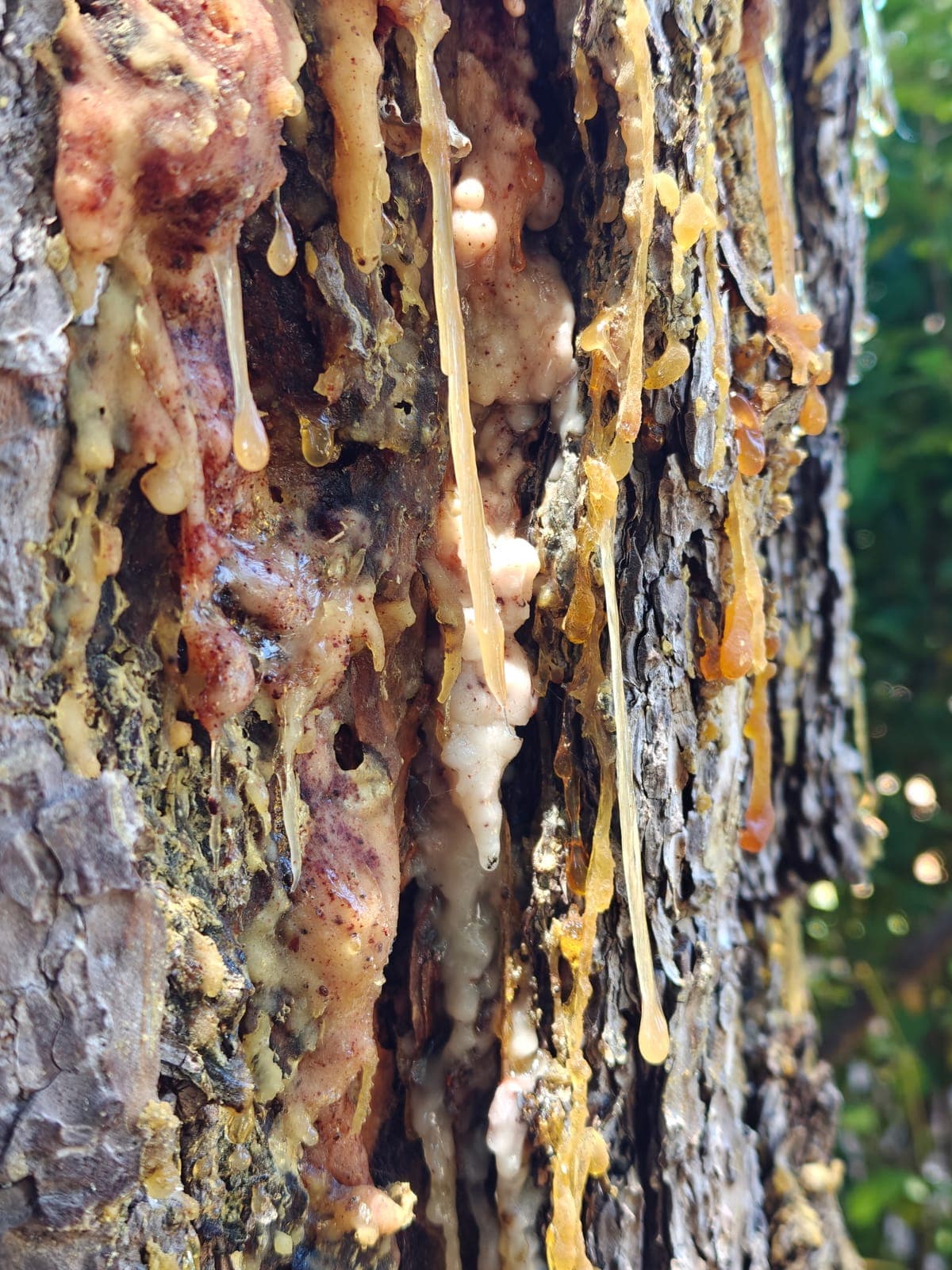
The single most dramatic looking symptom in this region is a gob of pitch the size of a golf ball to a fist on the trunk of a pine, often pink, gray, or cream, soft and gummy when fresh. That is usually the work of the sequoia pitch moth, whose larva feeds shallowly in the inner bark and keeps the wound weeping into a growing mass of resin. It looks like the tree is hemorrhaging. In reality the damage is almost always minor and cosmetic: the masses accumulate for years, the pine goes on living, and the honest advice is usually to leave it alone. Pitch moths favor wounded trees, so the practical prevention is to avoid wounding and pruning pines during the warm flight season.
The distinction that matters stands right next to it. A bark beetle attack also produces pitch on a pine, but as pitch tubes: popcorn sized, numerous, and mixed with fine reddish boring dust in the bark crevices, often with the crown fading above. One fist sized gob with no boring dust is a pitch moth and a shrug. Dozens of small tubes with dust and a thinning crown is a beetle attack and a phone call. Size, number, and dust: that is the read.
The chronic and mostly tolerable: slime flux
A dark, wet streak running down the trunk from a crack or old wound, sometimes foamy, sometimes sour smelling, often with a chalky white or rust colored stain when dry: that is wetwood, or slime flux, a bacterial condition of the heartwood that pushes fermented sap out under pressure. It looks infected because it is, but it is a chronic, slow condition that trees commonly carry for decades. There is no treatment worth doing, and the old practice of drilling drain tubes did more harm than good. Keep the tree unstressed and let it wall the wetwood off. The flux earns attention mainly when it marks a large structural crack, in which case the crack, not the ooze, is the finding.
The middle of the range: cankers and stress cracking
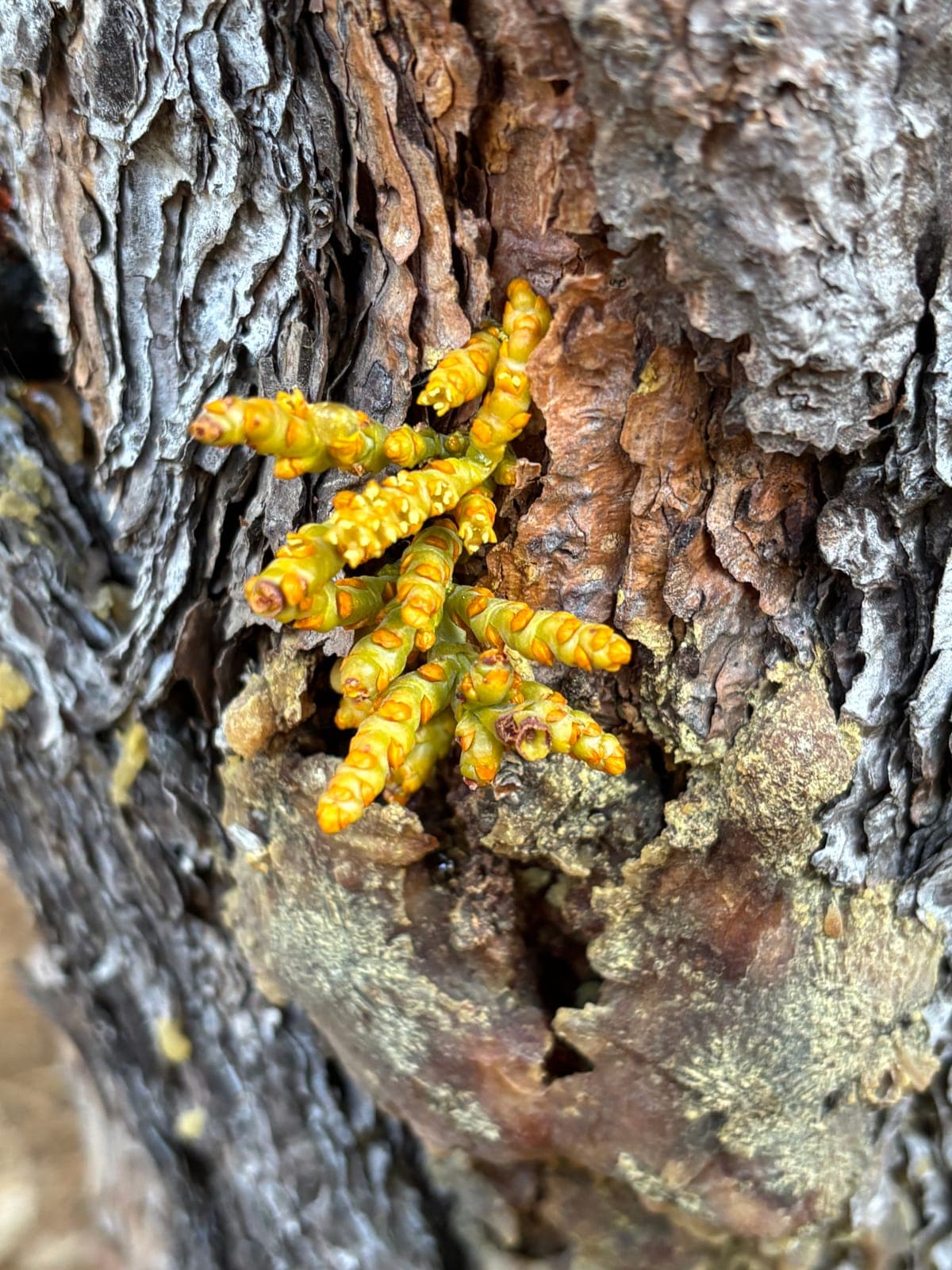
Drought stressed trees crack. Long vertical seams on the trunk of an oak or pine after a brutal summer are common here, and many close and callus over. What moves a crack up the worry list is dead, sunken bark around it, discharge from it, or fungal fruiting on it. On live oaks, a reddish seeping that turns foamy, like beer froth, marks foamy bark canker, a disease carried by the western oak bark beetle into drought stressed trees. Cankers in general, sunken dead patches of bark, oozing or dry, are the point on this spectrum where identification stops being optional, because which organism made the canker decides whether the response is water management, pruning out a limb, or planning for the tree's removal.
The serious end: bleeding cankers and decay
Two findings earn a call promptly. The first is bleeding: dark, often nearly black ooze seeping from the lower trunk or root crown with no boring dust and no obvious wound, especially on a tree with a thinning crown and a watering system nearby. That pattern points toward Phytophthora, a root and crown disease of overwatered and poorly drained ground, and it is progressive: the earlier the water and drainage are corrected, the more tree there is left to save.
The second is bark coming away over dead wood: bark falling off in plates to expose brown, punky, or stringy tissue, woodpeckers working the trunk hard, or any mushroom or shelf conk growing from bark, wood, or the root flare. Decay fungi digest the structure that holds the tree up, a conk is a late symptom rather than an early one, and at that point the question is structural: how much sound wood remains and what is within falling distance. That is risk assessment territory, and identifying which fungus is involved, my laboratory specialty, decides how fast the answer changes.
All of this is written from the Sierra Nevada foothills. The bark and sap complaints that reach me in El Dorado, Placer, and Amador counties come mostly off ponderosa and gray pine around Placerville, Camino, and Pollock Pines, and off valley oak, blue oak, and California black oak from Cameron Park down through Folsom and into Sacramento. The same symptom means different things on those two groups, which is the first thing I sort out.
How I read a bark or sap complaint
Species first, because normal for madrone is fatal looking on an ash. Then location, trunk base versus upper trunk versus limbs, because root crown symptoms outrank everything above them. Then the discharge itself: resin or sap, fermented flux, or dark watery bleeding, with or without boring dust, with or without fungal structures. Most cases sort in minutes on site. The ones that do not are the ones worth culturing, and either way you get the finding in writing. A site assessment with a written report starts at $500. Call or text (530) 391-6100, and a clear photo of the symptom ahead of time is genuinely useful.
University and research sources
- UC IPM: Wetwood, or Slime FluxThe University of California reference on wetwood, and why no treatment is recommended.
- UC IPM Pest Notes: Phytophthora Root and Crown RotThe bleeding canker and root crown disease at the serious end of this page's spectrum.
- UC IPM Pest Notes: Wood Decay Fungi in Landscape TreesWhat conks and sloughing bark over dead wood indicate about the structure inside.
- Lynch, Wang, Mayorquin, Rugman-Jones, Stouthamer and Eskalen (2014), Plant DiseaseThe first report of foamy bark canker on coast live oak in California.
- UC IPM: Bark BeetlesPitch tubes, boring dust, and the beetle attack this page distinguishes from pitch moth masses.
Frequently Asked Questions
Why is my tree's bark peeling?
Depends entirely on the species and what shows underneath. Madrone, sycamore, incense cedar, and mature pines shed bark by design, and young trees slough thin bark as they grow; sound new bark underneath means all is well. Peeling that exposes dead brown wood, or comes with conks, woodpecker work, or boring dust, points to decay or beetles and deserves an assessment.
Is sap oozing from a tree bad?
Sometimes it is nothing and sometimes it is the most important sign on the tree. Clear resin from a pruning wound or a pitch moth mass on a pine is usually minor. Fermented, sour smelling flux from a trunk crack is chronic wetwood, ugly but tolerable. Dark bleeding from the lower trunk with no wound and no boring dust, on a tree that gets summer water, deserves a prompt look for Phytophthora.
What is the big gob of pitch on my pine tree?
Almost certainly a sequoia pitch moth mass: a golf ball to fist sized, gummy, pink to cream lump of resin where a larva is feeding shallowly in the inner bark. It looks terrible and rarely matters. The dangerous look alike is a field of small popcorn sized pitch tubes with reddish boring dust, which is a bark beetle attack. Count and size the pitch, and look for the dust.
Why is my oak tree leaking sap?
Three different things get reported as an oak leaking sap, and they sit at opposite ends of this page. If the drip comes from the canopy and coats everything under the tree in a sticky film, it is usually not sap at all but honeydew from aphids or scale insects feeding in the crown, a nuisance more than a threat. If the ooze runs from a crack or old wound on the trunk and smells fermented, that is wetwood, described above. Dark fluid seeping from the lower trunk or root crown with no wound, no boring dust, and a thinning crown is the serious version, and it earns a prompt look for Phytophthora.
What is slime flux and can it be treated?
A bacterial condition of the heartwood that ferments sap and pushes it out through cracks and old wounds as a dark, sometimes foul streak. There is no effective treatment, and the historical fixes, drain tubes especially, hurt trees more than the flux does. Trees carry it for decades. Reduce stress, skip the remedies, and have the crack it flows from checked if it is large.
When is oozing bark an emergency?
When dark bleeding at the base pairs with a thinning crown, when ooze comes from a long structural crack, or when any of it appears alongside mushrooms or conks on the trunk or root flare. Those combinations put root disease or structural decay on the table, and both reward early answers. Photograph it, then call.