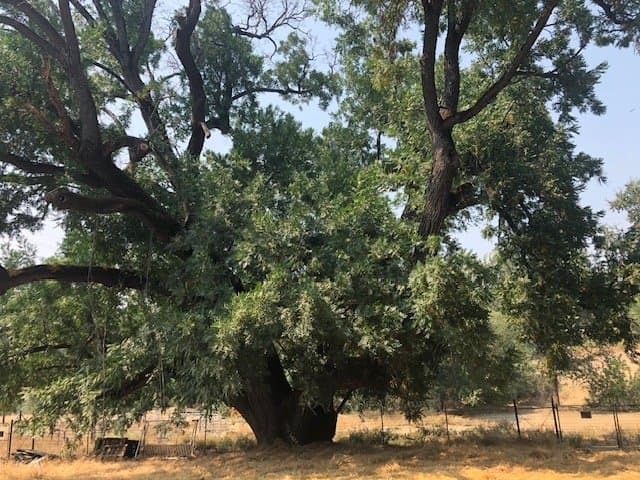
Trees are ecosystems themselves. They are highly complex organisms having relationships with numerous bacteria, fungi, and animals that provide mutualism, hydrological services, and foundational ecological functions.
When I first entered arboriculture, coming from a world of fungal taxonomy and science based research, I was surprised to see the average arborist not utilizing the wealth of scientific information about trees and tree health to perform work in an educated fashion, work that better serves the customer, the trees, and the ecosystem. That's where Sierra Tree and Fungi came in. I started assisting friends and colleagues in educating them on the latest research on trees and how to better support healthy ecosystems that depend on symbiotic fungi to maintain healthy trees and healthy forests.
What Grounded in the Literature Should Actually Mean
Every arborist website says its recommendations are based on science. It is an easy sentence to write and a harder one to earn, so this page tries to earn it by naming the practices, naming what changed them, and pointing you at the sources so you can check the reasoning yourself.
There is a structure behind those sources worth understanding. ANSI A300 is the American National Standard for tree care operations, meaning the work itself. ANSI Z133 is a separate standard covering safety and health requirements for arboricultural operations. Alongside them the International Society of Arboriculture publishes a Best Management Practices series, covering pruning, tree risk assessment, soil management, root management, tree support systems, managing trees during construction, and tree planting. The standards say what the work must meet. The best management practices explain how to do it in light of current research. Reports are written to the best management practices, not to A300, and getting that distinction right is itself a small test of whether someone is reading the literature or repeating a marketing line.
Five Practices the Evidence Corrected
The most useful way to show what evidence based arboriculture means is to look at things the trade once did routinely and no longer defends.
Topping
Topping is the indiscriminate cutting of branches back to stubs or to lateral branches too small to assume the terminal role. The International Society of Arboriculture calls it perhaps the most harmful pruning practice known, and describes the consequences directly: unacceptable risk, tree stress, and decay. The reasoning is biological rather than aesthetic. Removing a large fraction of the leaf area starves a tree that was budgeting on that canopy, the heading cuts leave wounds the tree cannot compartmentalize efficiently, and the flush of weakly attached regrowth that follows creates the very hazard the topping was often meant to prevent. It is still sold in this region every summer.
Wound dressings and pruning paint
Painting a pruning cut looks like care. The University of California statewide integrated pest management program states in its Pest Notes on wood decay fungi in landscape trees, ANR Publication 74109, that wound dressings are not recommended because they do not hasten wound closure or prevent decay, and in some cases may hasten decay behind the dressing. This is a good example of a practice that persisted for decades on plausibility alone. A tree does not heal a wound the way skin does. It walls the damage off internally, and a sealed surface can favor the very organisms the coating was supposed to exclude.
Staking new trees by default
Standard practice for a long time was to stake everything at planting. International Society of Arboriculture guidance now puts it the other way around: trees develop stronger trunks and roots if they are not staked. Staking may be required for bare root stock or on windy sites, and when it is used the stakes should come off after the first year of growth. The mechanism is that the movement a young stem experiences in wind is a signal it responds to by laying down reinforcing tissue. Immobilize the stem for three years and you get a tall, slim tree that cannot stand up on its own the day the stakes finally come off.
Planting too deep and burying the root collar
A great deal of slow urban tree decline is a planting error that nobody sees again for years. International Society of Arboriculture guidance is that most of a tree's roots develop in the top twelve inches of soil, that planting too deep is harmful, and that the trunk flare must remain partially visible after planting, with excess soil removed beforehand if the flare is buried. When the flare is under soil or mulch, bark that evolved to be dry stays wet, girdling roots go undetected, and the tree declines from a cause that a shovel and ten minutes at planting would have prevented. Root collar excavation on an established tree is one of the highest value, least glamorous things an arborist can do.
Reaching for a fungicide
The reflex to spray something is strong, and for many of the organisms that matter most it accomplishes nothing. The University of California Pest Notes on Armillaria root rot, ANR Publication 74171, notes that there are no registered fungicides for Armillaria control, and explains why: the material cannot reach the mycelial fans under the bark, cannot penetrate the protective rind of rhizomorphs, and degrades in soil. For decay and root organisms generally, the honest answer is usually cultural. Correct the water, protect the root zone, reduce the load or the target, and monitor. Identification still matters enormously, but it matters because it tells you what will happen and how fast, not because it unlocks a spray.
The fieldwork behind all of this is in the Sierra Nevada foothills, on blue oak, valley oak, interior live oak, and California black oak, and on ponderosa pine, gray pine, incense cedar, and Douglas fir. That is worth stating plainly, because a practice that is right for one flora and one climate can be wrong for another, and a good deal of the bad advice in this trade is good advice that traveled.
Understanding Fungal Ecology in Trees
Trees accumulate fungal relationships throughout their lives. Endophytic fungi live within the plant tissues from the acorn stage onward, growing with the tree as it develops. As trees mature, they accumulate both endophytic fungi and mycorrhizal fungi, which help them procure water, micronutrients, nitrogen, and phosphorus from the soil.
Some of these endophytes become wood decay fungi. Later in a tree's life, they work to degrade old wood, sometimes causing structural issues, but sometimes removing unused heartwood and providing the tree with nutrients that were locked up in the heartwood and lignin. Fungi are complex organisms that act more as a system than as individual agents in the landscape.
This is not an abstraction in oak country. The US Forest Service field guide to the insects and diseases of California oaks, General Technical Report PSW-GTR-197 by Swiecki and Bernhardt, documents how many of the significant oak problems in this state are stress driven, with organisms that live quietly in healthy tissue turning damaging when drought, heat, or injury shifts the balance. That is a very different mental model from a pathogen arriving from outside and attacking a healthy tree, and it changes the advice. If the fungus was already there, the intervention that matters is usually the one aimed at the stress.
What a Mushroom on a Trunk Actually Tells You
Here is a case where the science replaces a guess with a real constraint. The University of California Pest Notes on wood decay fungi notes that a visible fruiting body is usually associated with decay that is already advanced, and that the extent of that decay may run far above or far below where the fruiting body sits. It also gives the figure that makes decay worth taking seriously at all: a loss of roughly 10 percent of wood weight can cost 70 to 90 percent of wood strength.
Two practical conclusions follow. A conk is a late indicator, so its absence proves very little. And the visible fruiting body does not map the decay column, so the assessment has to work out where the decay actually is rather than assuming it surrounds the mushroom. Neither conclusion is available to someone identifying fungi by vibe.
Diagnosis Over Blind Treatment
Knowing how fungi play a role and properly identifying fungi is critical to understanding tree health. The first question on any fruiting body is which of three very different things it is: an aggressive wood decay organism, a saprotroph recycling wood that is already dead, or a mycorrhizal partner the tree depends on. Those three call for three different responses, and one of them calls for no response at all.
Broad spectrum fungicide applied at the first sign of a problem is the opposite of that. It treats a name you have not established, on an organism that may be helping, using a material that in many of these cases cannot reach the target anyway. International Society of Arboriculture plant health care guidance takes the same line from the other direction, emphasizing routine monitoring and careful examination to identify symptoms and diagnose the problem before selecting a treatment. Prescriptive tree care starts with a diagnosis, and a diagnosis starts with correctly naming what is there. I identify the organism in the field and, when the question warrants it, under the microscope or in culture, and I write down what the evidence does not establish alongside what it does.
Frequently Asked Questions
Is topping ever appropriate?
No, not as a management practice. The International Society of Arboriculture describes topping as perhaps the most harmful pruning practice known, because it removes a large share of the leaf area, leaves wounds the tree cannot close efficiently, and produces weakly attached regrowth that can become the hazard the work was meant to prevent. Where a tree genuinely needs its size reduced, the correct approach is a reduction using proper cuts to appropriate lateral branches, which is a different operation with a different result.
Should I paint or seal a pruning cut?
No. The University of California states in Pest Notes 74109 that wound dressings are not recommended, because they do not speed wound closure or prevent decay and in some cases may hasten decay behind the dressing. A clean cut at the proper location, made at the right time of year for the species, is the whole treatment.
Do newly planted trees need stakes?
Usually not. International Society of Arboriculture guidance is that trees develop stronger trunks and roots when they are not staked, with staking reserved for bare root stock or windy sites and the stakes removed after the first year of growth. Stem movement is a signal the young tree responds to by strengthening itself, and removing that signal for years produces a tree that cannot stand alone.
Are all mushrooms on my tree bad news?
No. Many fungi around a tree are saprotrophs recycling dead wood or mycorrhizal partners that help the tree take up water and nutrients. What matters is which organism it is and where it is fruiting. A conk emerging from a living trunk or the root crown is a different matter from a mushroom on a long dead branch, and telling them apart is exactly what identification is for.
How is evidence based arboriculture different from what a tree service does?
It is a difference of role rather than a judgment about tree services. I am a consulting arborist. I do not prune or remove trees and I run no removal crews, so I have no stake in whether a tree comes down, and where a report points to root or soil work I can do myself, I say so in it. My work is diagnosis, documentation, risk assessment, and written reports with the sources cited, so you can check the reasoning instead of taking it on trust. A site assessment with the written report starts at $500. The site visit on its own is $250 and covers up to one hour on site. Call or text (530) 391-6100.
Sources behind the practices on this page
- ISA, Pruning Your TreesThe International Society of Arboriculture consumer guidance that defines topping and calls it perhaps the most harmful pruning practice known.
- ISA, Planting a TreeInternational Society of Arboriculture guidance that trees develop stronger trunks and roots if they are not staked, and that the trunk flare must remain visible.
- ISA, Plant Health CareInternational Society of Arboriculture guidance on monitoring, diagnosis, and preventive care rather than reactive treatment.
- ISA, Managing Tree Hazards and RisksInternational Society of Arboriculture guidance on tree risk inspection and on using an arborist who is ISA Tree Risk Assessment Qualified.
- ISA, Why Hire an ArboristThe International Society of Arboriculture explanation of arborist certification as a voluntary, nongovernmental documentation of knowledge.
- ISA, Tree Owner InformationThe full International Society of Arboriculture library of consumer tree care guidance behind the practices described here.
University of California and USDA references
- UC IPM Pest Notes: Wood Decay Fungi in Landscape TreesUniversity of California ANR Publication 74109, by Downer and Perry, on white, brown, and soft rots, what a fruiting body indicates, and why wound dressings are not recommended.
- UC IPM Pest Notes 74109, full textThe same University of California Pest Notes on wood decay fungi, including the figure that a 10 percent loss of wood weight can cost 70 to 90 percent of wood strength.
- UC IPM Pest Notes: Armillaria Root RotUniversity of California ANR Publication 74171 on mycelial fans, rhizomorphs, and why there are no registered fungicides for Armillaria control.
- USDA Forest Service, A Field Guide to Insects and Diseases of California OaksGeneral Technical Report PSW-GTR-197, Swiecki and Bernhardt, Pacific Southwest Research Station, 2006. The standard regional reference for oak pests and pathogens.
Standards and qualifications
- ISA store: standards and best management practicesWhere the ANSI A300 tree care standards, ANSI Z133 Safety and Health Requirements for Arboricultural Operations, and the ISA Best Management Practices series are published.
- ISA Tree Risk Assessment QualificationThe International Society of Arboriculture page describing TRAQ as a voluntary qualification, earned by course and assessment and renewed every seven years.