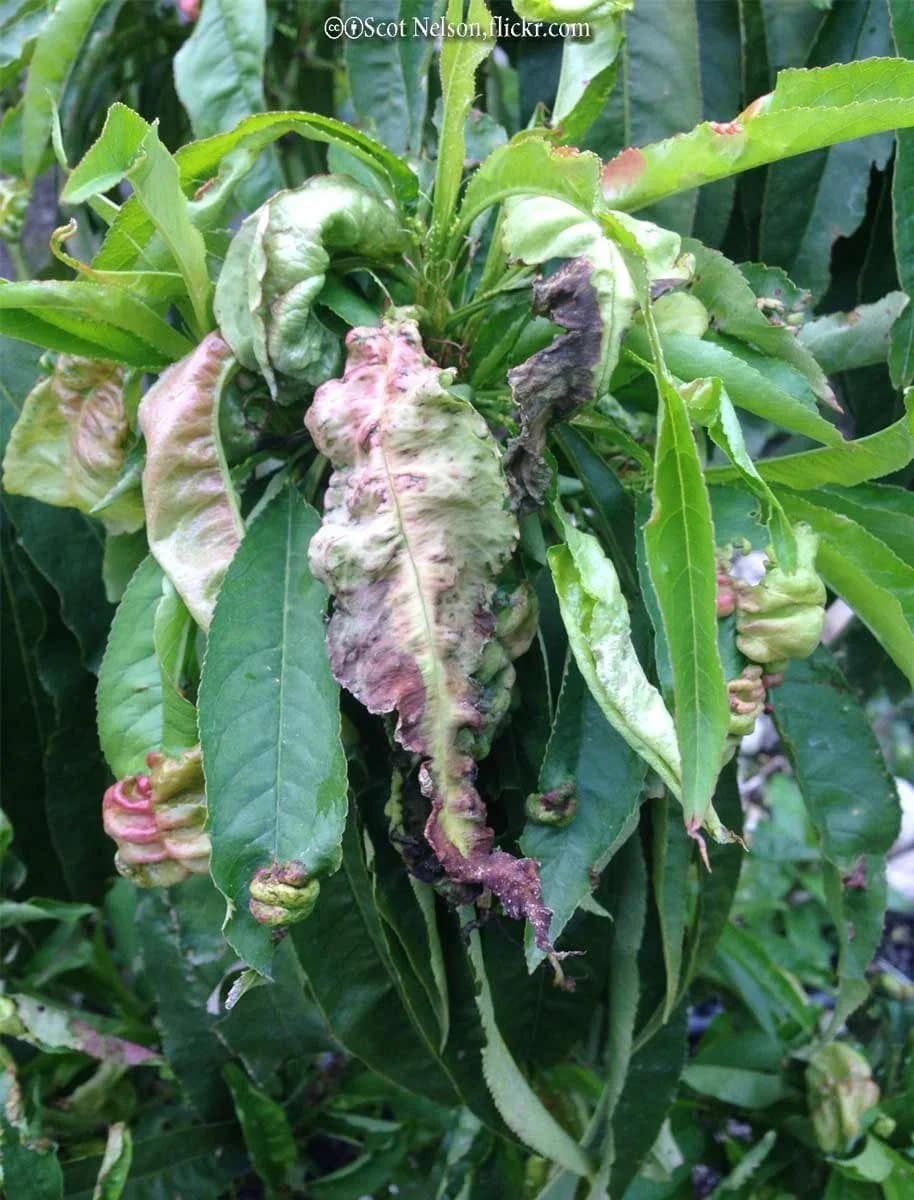
The single most important fact about peach leaf curl is the timing: you treat it in late fall and winter while the tree is dormant, not in spring when you see the puckered red leaves. By the time the symptoms appear, it is too late to help that season. Peach leaf curl is a fungal disease of peach and nectarine trees caused by Taphrina deformans, and the reliable way to control it in El Dorado County is a dormant season fungicide application after leaf drop and again before the buds swell.
What peach leaf curl is
Peach leaf curl is caused by the fungus Taphrina deformans. In spring, infected new leaves emerge thickened, puckered, and tinted red or orange, then later turn yellow and drop. A heavy infection can defoliate a tree, reduce the fruit crop, and weaken the tree over successive years. It affects peaches and nectarines in particular.
Why timing is everything
The fungus overwinters on the bark and bud surfaces and infects the buds as they begin to swell in late winter. Once an infected leaf has emerged, no spray will reverse it, which is why spring treatment does not work. The whole strategy is to protect the buds during dormancy, before infection happens, which is the opposite of how most people instinctively respond to a disease they can finally see.
When and how to treat in El Dorado County
In our foothill climate, apply a dormant fungicide, commonly a copper based material recommended by the UC Statewide IPM Program, after the leaves drop in late fall, and again in late winter before the buds swell. In wet winters two applications protect better than one, because rain spreads the spores and washes off earlier coverage. As a California licensed Qualified Applicator, I can make the application at the right time, so the treatment actually lands in the narrow window that matters.
What to do if your tree already has it
If the leaves are already curled this spring, focus on getting through the season and preventing next year's infection. Keep the tree healthy with appropriate water, thin a heavy fruit set so the tree is not overtaxed, and plan the dormant treatment for the coming fall and winter. A single bad year rarely kills an established tree, but repeated infection wears it down.
Frequently Asked Questions
When should I spray for peach leaf curl?
In the dormant season, not in spring. Follow UC IPM's timing: a dormant fungicide after the leaves drop in late fall, and in wet winters a second application in late winter before the buds swell. Spraying after the leaves have emerged and curled does not control the disease for that season.
Can peach leaf curl be cured once the leaves are curled?
Not for the current season. Once leaves emerge infected, no spray reverses the damage. You manage the tree through the year and prevent next year's infection with a dormant season treatment.
Sources
- UC Statewide Integrated Pest Management Program (UC Agriculture and Natural Resources). Peach Leaf Curl.