When people find a fungus on a tree, the first question is almost always the same: is my tree in trouble? The honest answer is that it depends entirely on what the fungus is and where it is growing. Some fungi are harmless recyclers of dead wood, some are quietly beneficial partners at the roots, and a few are serious pathogens that decay living wood from the inside. This is a practical guide to telling them apart, and to knowing when what you are looking at is a warning worth acting on.
Where I am looking from
Everything here comes out of fieldwork in the Sierra Nevada foothills, across El Dorado, Placer, Amador, and Sacramento counties. The hosts are blue oak, interior live oak, valley oak, and California black oak, along with ponderosa pine, gray pine, incense cedar, and Douglas fir. Fungal identification is bound to climate and to host, so if your tree is somewhere else the principles carry over but the species list will not.
First, what kind of fungus are you looking at?
Start by naming the structure, because the shape tells you a lot:
- A soft, fleshy mushroom with a cap and stem, usually short lived and appearing after rain.
- A conk or bracket, a hard, woody, shelf like growth attached directly to the bark that can persist for months or years.
- A crust or a spreading white fan of tissue under the bark or at the soil line.
- A powdery or fuzzy coating on leaves, which is usually a foliar issue like powdery mildew and is rarely a structural threat.
The soft mushrooms and the woody conks are the ones that matter most for the tree's future, because they are the fruiting bodies of fungi that may be feeding on wood.
Where the fungus is growing matters most
Location is the single most useful clue, because it tells you which part of the tree is being decayed and therefore what is at stake:
- At the base or on the roots: this points to a root or butt rot. It is the most serious location, because decay here attacks the roots and lower trunk that hold the whole tree up, and it raises the risk of the tree uprooting.
- On the trunk: this points to a stem or heart rot decaying the structural wood inside the trunk, which can weaken it well before the outside looks bad.
- On branches, often at old wounds or branch junctions: this points to a canker rot or a branch decay, usually a more local concern.
- On the leaves only: this is almost always foliar and cosmetic, not a structural problem.
What a conk actually tells you
This is the part most people get backwards. A conk or a cluster of mushrooms on a living tree is not the start of a problem, it is a sign the problem is already advanced. According to the University of California, by the time fruiting structures appear on the outside, the wood decay fungus is well established in the inner structural wood of the tree. The conk is the visible flower of a decay that has been working inside for a long time. That is also why breaking off a conk does nothing useful. The fungus is in the wood, not in the conk.
Decay fungi break wood down in different ways, and the type of rot affects how the wood fails. Brown rot digests the cellulose and leaves the wood crumbling into dry, cubical brown pieces. White rot breaks down both cellulose and the lignin that binds it, leaving the wood pale, spongy, and stringy. Both weaken the tree, but they behave differently under load, which is one of the things I read when I assess a decayed tree.
Harmless, helpful, or harmful?
Not every fungus near a tree is bad news. Sorting them is the whole point of identification:
- Helpful: many mushrooms that pop up in the soil around a tree are mycorrhizal, meaning they are partnered with the roots and are a sign of a healthy soil, not a disease.
- Harmless: fungi fruiting on a dead stump, a fallen log, or long dead branches are usually saprophytes, doing the useful work of recycling wood that is already dead.
- Harmful: fungi fruiting from the living roots, trunk, or main limbs of a living tree, such as Armillaria at the base or a bracket on the trunk, are the ones that decay living structural wood and deserve a closer look.
A useful rule from the field is that heart rot fungi tend to produce a few conks near branch junctions, while saprophytes tend to scatter many conks randomly over dead wood. It is a clue, not a diagnosis, but it helps sort the serious from the routine.
Four fungi you can learn to recognize
Most fungi on trees cannot be safely named from a photograph, and the section after this one explains why that caution matters. But a handful of local species are distinctive enough that recognizing them is realistic, and every photograph below is my own, taken on this work in this region.
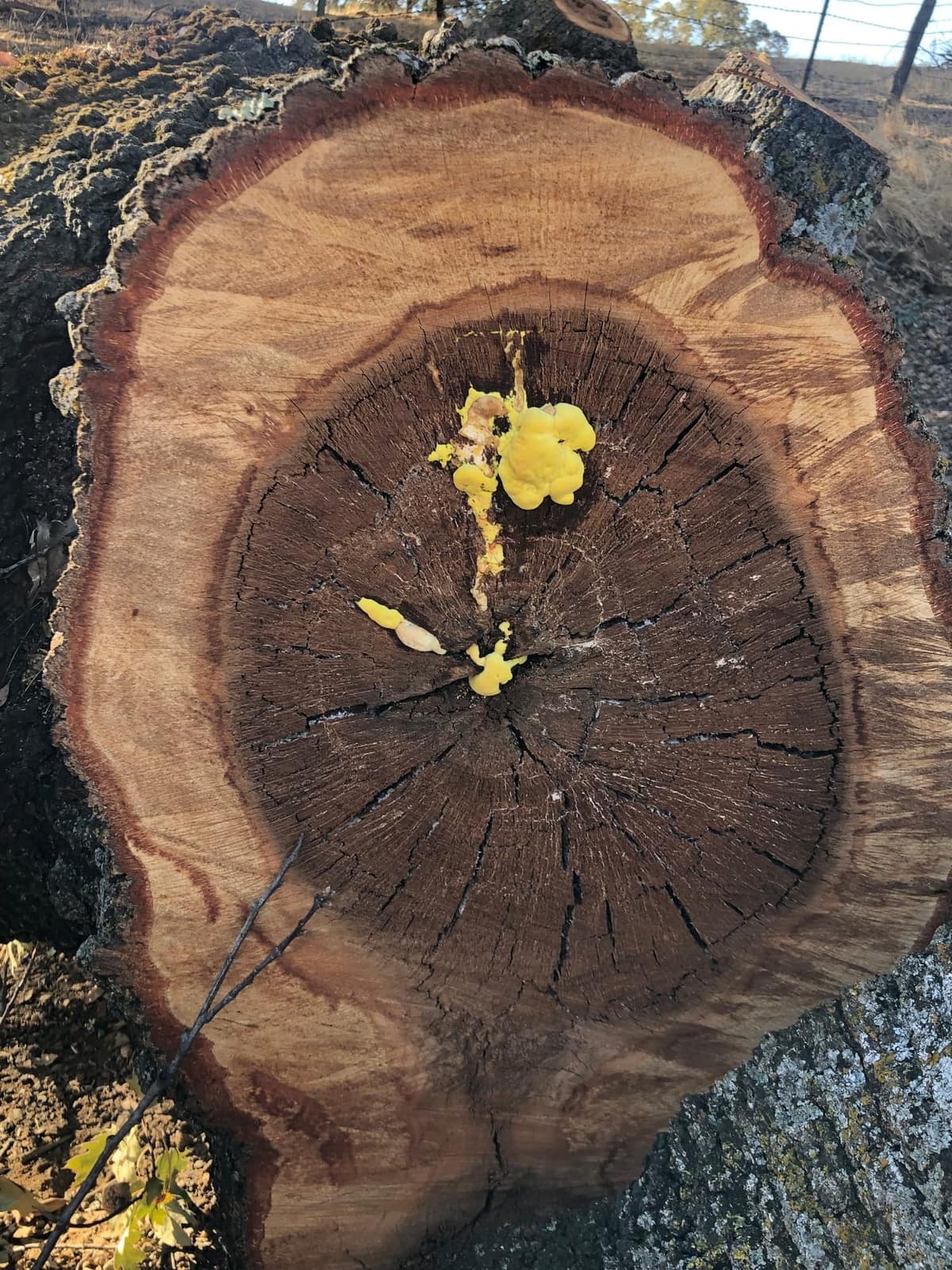
Laetiporus, the western sulphur shelf
The bright orange and yellow brackets in the photograph at the top of this page, fruiting in overlapping shelves on oak trunks in late summer and autumn. It is unmistakable when fresh, and it matters because it causes a brown rot of the heartwood: the decayed wood turns brittle and cubical and fails suddenly rather than bending first. A mature oak fruiting Laetiporus from the trunk deserves a structural assessment, not a wait and see.
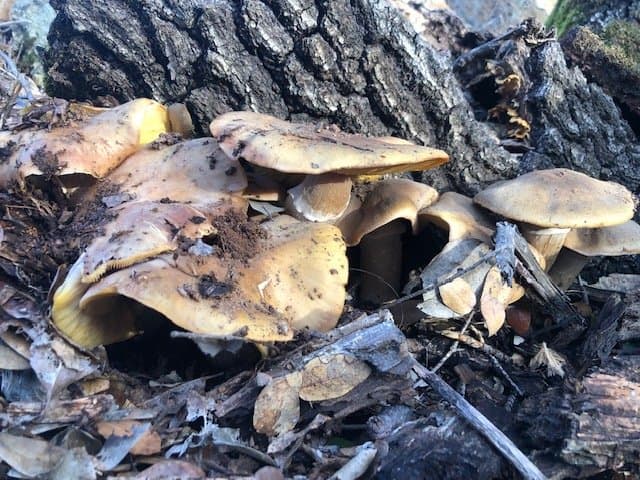
Armillaria mellea, the oak root fungus
Honey colored mushrooms in a dense cluster at the base of the trunk, usually after the first soaking autumn rains, as in the photograph above. This is the aggressive root disease of this region, and one California detail is worth knowing: the black shoestring rhizomorphs people are taught to look for are actually weak evidence for this species here. In the California work, Armillaria mellea was mostly recovered from white mycelial fans under the bark of living trees, while the shoestrings on root surfaces mostly belonged to the milder species. The fan under the bark is the finding that matters.
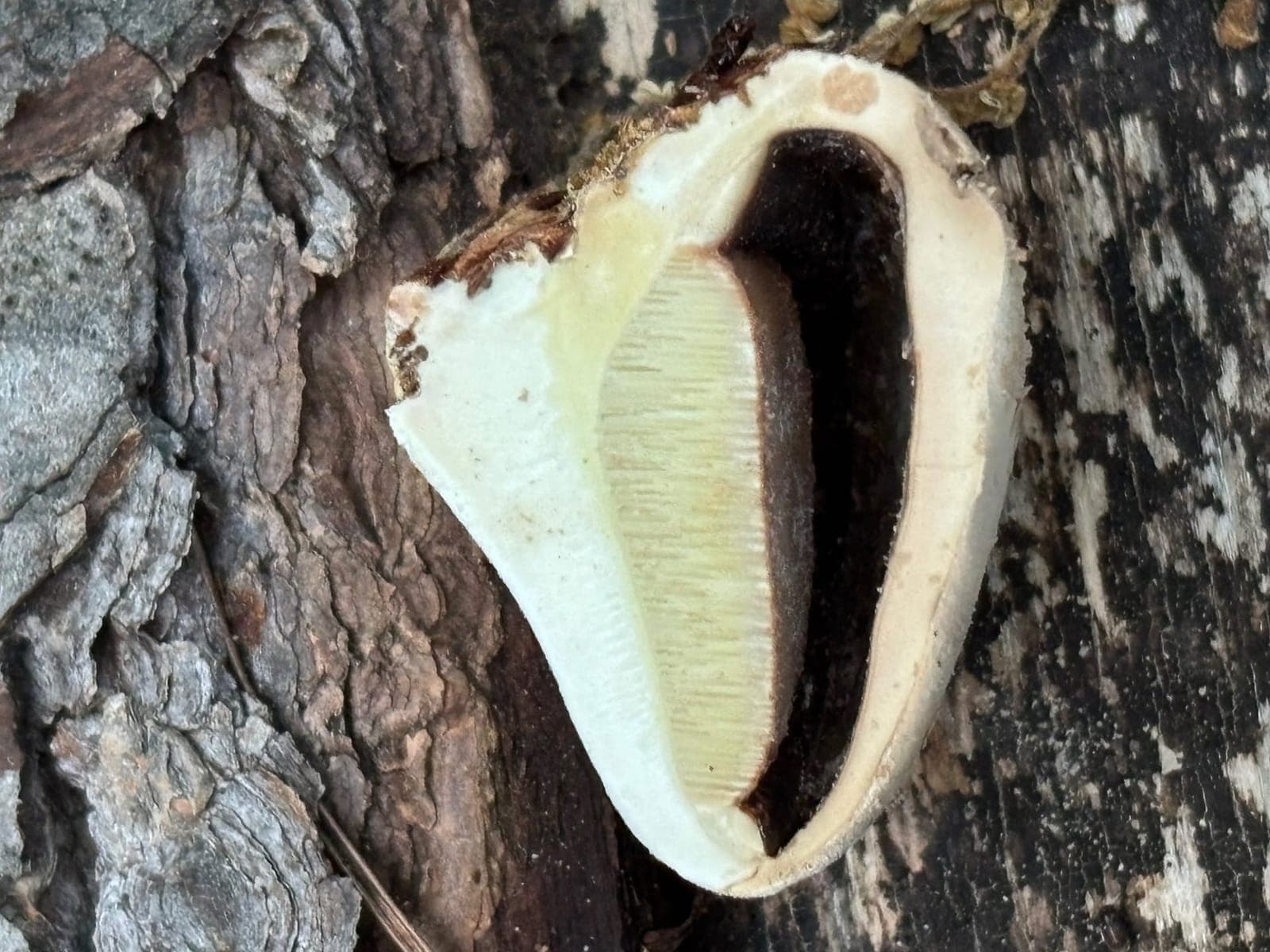
Cryptoporus volvatus, the veiled polypore
A small rounded conk on conifers with a built in veil that hides its pore surface, shown sliced open above. Find it on a pine or fir and the fungus is the messenger rather than the culprit: it fruits on trees killed or dying from bark beetle attack, usually appearing within a year of the attack. It is effectively a flag that says check the neighbouring conifers for beetles, and I have written about it separately.
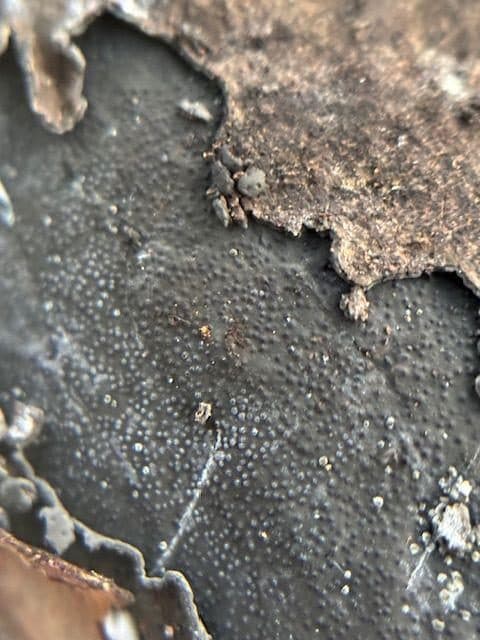
Biscogniauxia, charcoal canker
Not a mushroom at all to the eye: a black, crusty, carbonized sheet that looks like the bark was scorched, erupting on the trunks and limbs of drought stressed oaks. By the time the black stroma shows, that part of the tree is dead, so the real question it raises is water: the fungus succeeds on oaks already pushed past their drought tolerance, and the neighbouring oaks on the same site are the ones a site visit is really about.
If what you found does not match any of these, that is normal, and it is the point of the caution below. These four are recognizable; hundreds of others genuinely are not.
Why you cannot spray a tree fungus away
One of the most common questions I get is which fungicide to use on an oak or another tree with a fungus on the trunk. For wood decay fungi, the answer is none. There are no chemical treatments that cure wood rot in a standing tree, and destroying the conk does not touch the decay inside. Management is not about killing the fungus, it is about assessing how much sound wood is left, keeping the tree as healthy and unstressed as possible, and deciding whether the tree is still safe to keep. Fungicides have a real role in some leaf and shoot diseases, but they do not reverse internal wood decay.
Why identification often needs an expert
Many wood decay and root disease fungi look alike to the eye, and the difference between a harmless recycler and a root killing pathogen can come down to microscopic features of the spores or the fruiting body. This is the part of the work I specialize in. I identify tree fungi in the field and, when it matters, under the microscope, so a client knows whether the mushroom at the base of their oak is a passing saprophyte or Armillaria root disease. That answer changes everything about what to do next, from nothing at all to a full tree risk assessment.
University and industry resources
- UC IPM: Wood Decay Fungi in Landscape TreesThe University of California guide to wood decay fungi, what conks mean, the types of rot, and why there is no chemical cure.
- DecAID Decayed Wood Advisor, USDA Forest Service Pacific Northwest Research StationForest Service reference on the stem decay fungi of western trees and the decay they cause.
- Tree Care Industry Association: Identifying Important Wood Decay SpeciesAn arborist industry overview of the common wood decay fungi and how professionals tell them apart.
Frequently Asked Questions
Does a mushroom on my tree mean it is dying?
Not by itself. It depends on the species and the location. A mushroom in the surrounding soil is often a healthy mycorrhizal partner, and a fungus on a dead stump is just recycling dead wood. But a conk or cluster fruiting from the living roots, trunk, or main limbs usually means wood decay is already established inside, and that is worth having assessed.
How do you identify fungus on a tree?
By the structure, the location, and, when needed, the microscope. The shape tells you whether it is a soft mushroom, a woody conk, or a leaf mildew. The location on the tree tells you which wood is being decayed. For a firm identification of a pathogen, spores and fruiting body features are examined under magnification, since many species look alike to the naked eye.
Can I treat a tree fungus with a fungicide?
For wood decay fungi in a standing tree, no. There is no fungicide that cures internal wood rot, and removing the conk does not reach the decay inside. Fungicides do help with certain leaf and shoot diseases, but not with structural wood decay. The right response to wood decay is an assessment of the remaining sound wood and the tree's safety, not a spray.
Should I remove a conk from my tree?
There is no benefit to the tree in doing so. The conk is only the fruiting body. The fungus lives in the wood, so removing the conk does not slow the decay. If anything, the conk is useful left in place as evidence for identifying the fungus and judging how advanced the decay is.
Is a fungus at the base of my tree dangerous?
It can be, because the base and roots are where decay most threatens the tree's stability. A fungus fruiting at the root collar can indicate a root or butt rot that raises the risk of the tree uprooting. It is the location I take most seriously, and it is a good reason to have the tree looked at.